

It’s genuinely kind of incredible that it took this long for a filmmaker to attempt a full-blown cinematic autopsy of the year 2020. Sure, we’ve seen scattered references here and there - a character awkwardly putting on a mask, maybe some background chatter about “unprecedented times” - but no one’s dared to really, fully confront the collective psychotic break that happened in this country (and beyond) when a pandemic collided with political decay, digital overexposure, and the pressure-cooked fractures in every corner of our social fabric. With Eddington, Ari Aster doesn’t just wade into those waters - he does a full swan dive in and lets the madness bubble all the way up.
Following the wildly polarizing Beau is Afraid, Aster’s latest leans even harder into his new preferred flavor of surreal black satire, expanding from Beau’s personal panic attack into a whole town’s descent into psychological chaos. The scope is bigger but the tone remains tightly wound: bleak, bizarre, bitingly funny, and steeped in the kind of real-world horror that makes your skin crawl even harder than hereditary trauma or a cliffside ritual.
Set in Eddington, New Mexico - fictional, but all too real - the film chronicles the unraveling of a small desert town in the heat of 2020. The outside world is going to hell, and this community is just a particularly combustible microcosm of all the American contradictions that boiled over during that time. The pandemic is raging, information is unreliable, paranoia is high, and the lines between decency and delusion have blurred beyond recognition. It’s a hell of a setup, and Aster makes full use of it.
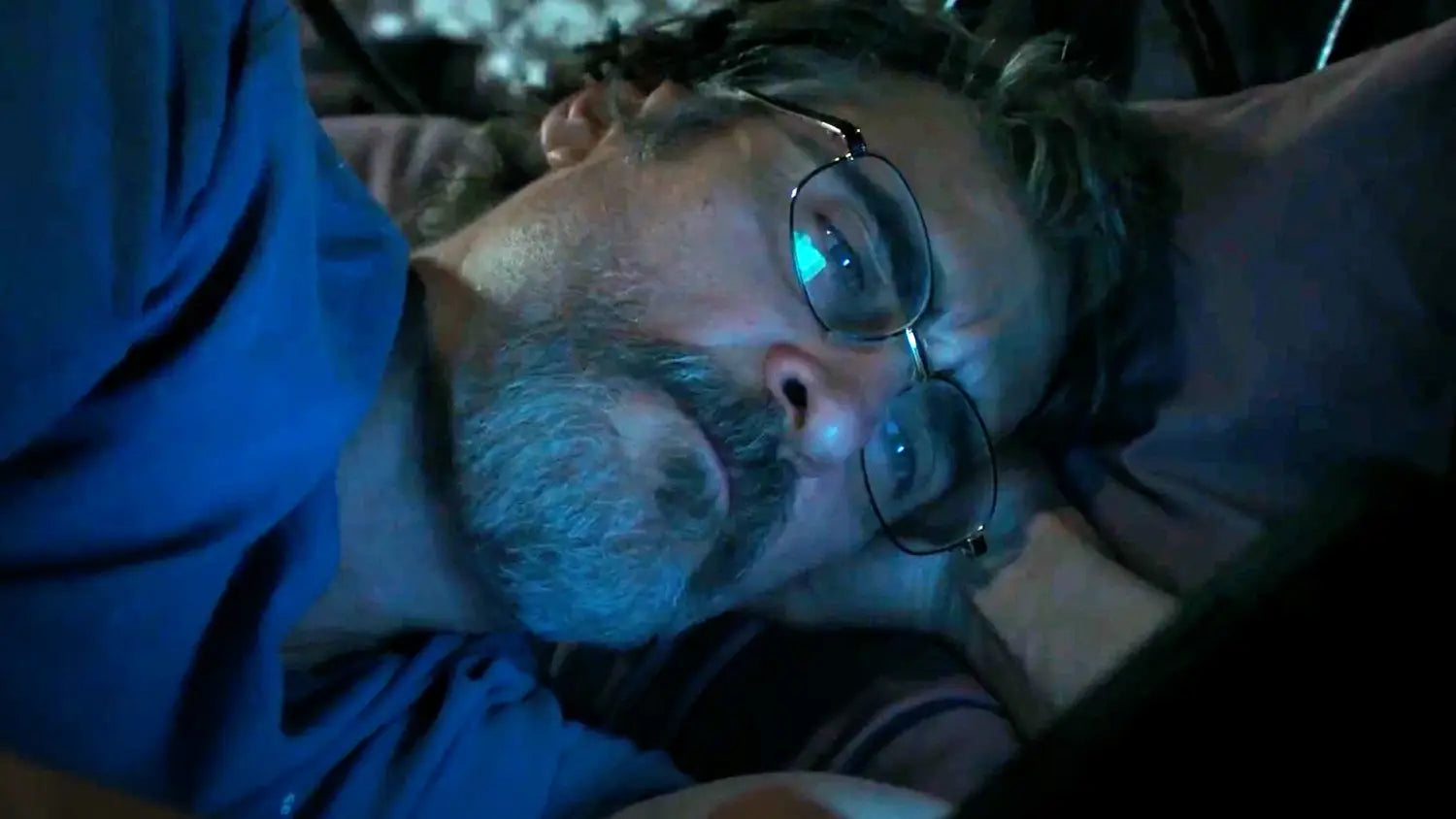
Joaquin Phoenix returns to the Aster-verse to play Sheriff Joe Cross, a man who begins the film already teetering on the edge of reason. Joe is one of those dudes who isn’t quite a villain when you meet him, but whose flaws are obvious enough that you’re bracing yourself for the inevitable downward spiral. He doom scrolls his nights away, resents the mask mandate, and posts car rant videos about “freedom” that toe the line between relatable and embarrassing. But he also wants to do good - when he helps an elderly man break a store’s mask rule to get his groceries, it’s not out of spite or politics but out of a sense of decency. It’s just that his small act of kindness snowballs into a personal crusade, then a political campaign, and finally…well, a full-on descent into madness.
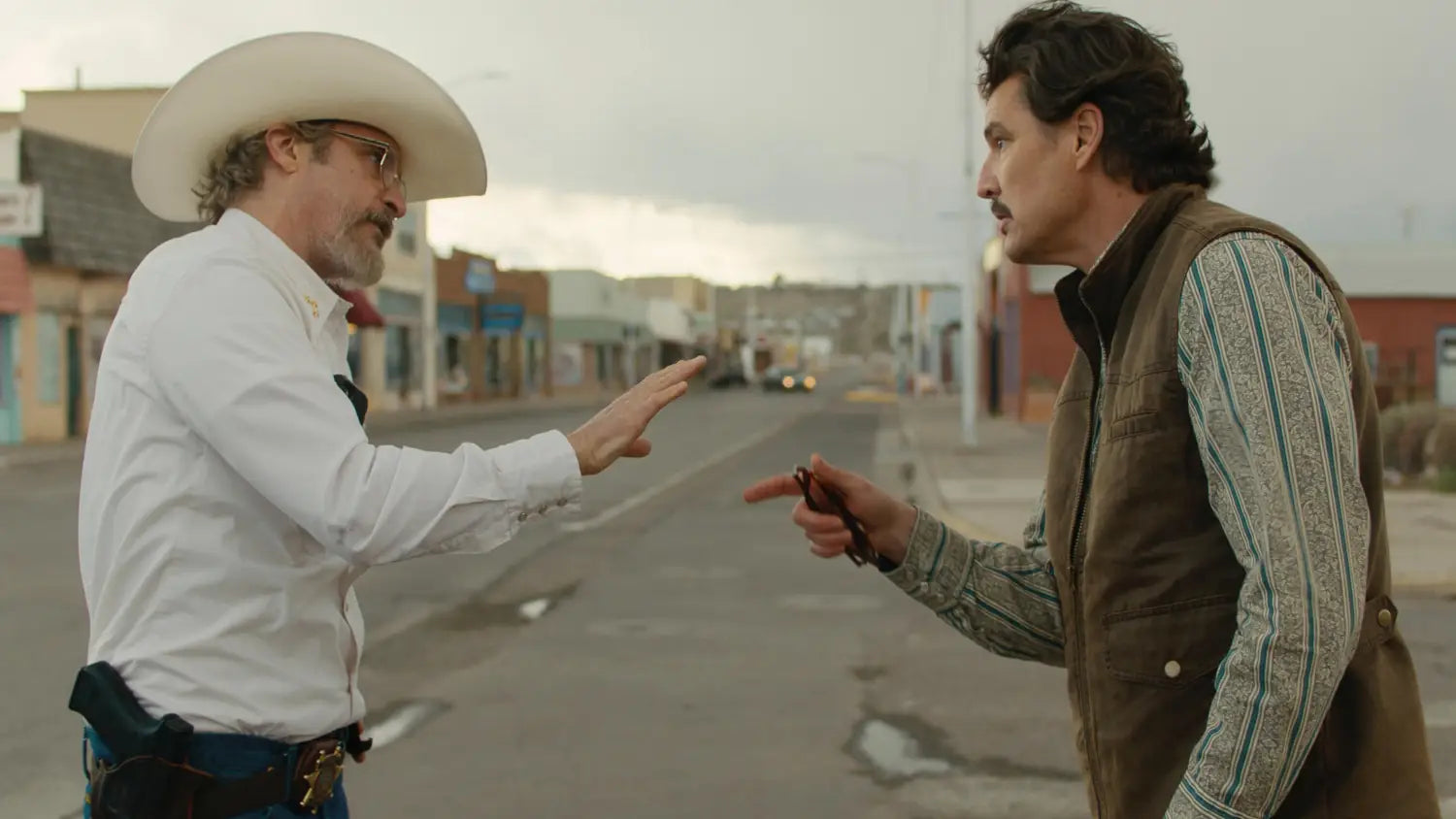
Opposing Joe is Mayor Ted Garcia (Pedro Pascal, delightfully oily), a tech-friendly politician campaigning for reelection on a massive data center to be built nearby - despite overwhelming community concern about resource depletion, particularly water. Ted is pro-mask, pro-progress, pro-everything that Joe stands against, but he’s also self-serving, smug, and, like most politicians, deeply compromised. Their battle for control of the town becomes the spine of the film, though “battle” in this case often means passive-aggressive barbs delivered at press conferences or deeply awkward run-ins at family events.
Joe’s wife Louise (Emma Stone) is caught somewhere in between - lost, lonely, and increasingly susceptible to the growing fringe cult led by Vernon Henderson Peak (Austin Butler in full freak mode). Vernon’s grift is obvious: he uses fear, frustration, vulnerability, and conspiratorial jargon to radicalize the disaffected. But it works, because it always works. Especially in a year when people were trapped at home, online, and terrified. Louise’s slow drift into that world is one of the film’s sharpest subplots, both tragic and uncomfortably familiar.
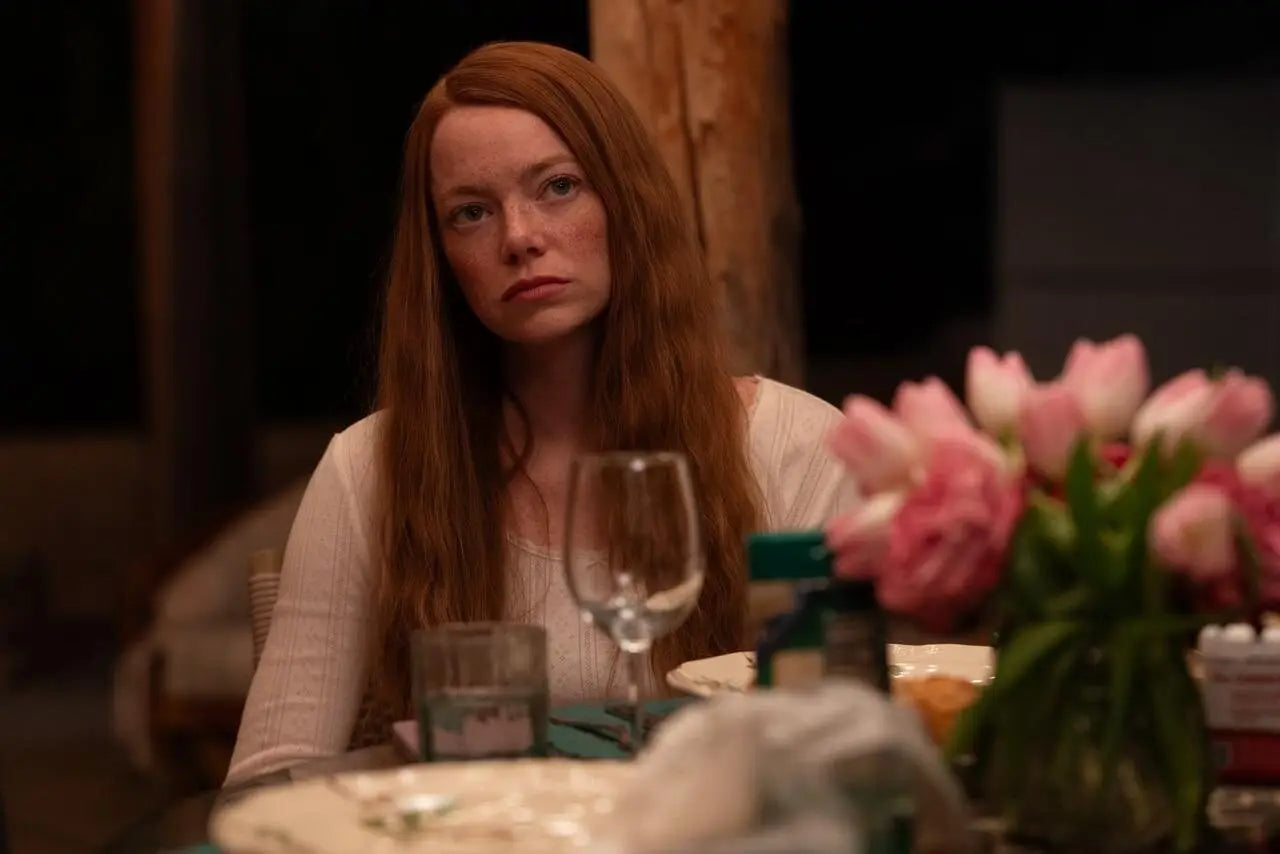
Aster fills Eddington with constant noise - talking heads on TV spouting conspiracy theories, misinformation, and rage; teenagers toggling between virtue signaling and performative edgelordism; arguments over masking that start with coughing and end in screaming. The film doesn’t “take a side,” at least not in the binary way most culture war stories try to. It’s more interested in what it felt like to live in the uncertainty and absurdity of that moment: to wonder if your neighbors were dangerous or just dumb, to question your own thoughts, to get angry and not remember why.
He captures it so specifically, too. One guy googling Angela Davis before trying to flirt with a girl in a BLM shirt. A protestor screaming about stolen land and white privilege and how they themselves have no right to the very speech they’re delivering. An antifa scare that might be real or might be a hallucination. And all the while, the people in the background keep spiraling: into TikTok activism, into cults, into violence. It’s satire, but it’s also just reportage with a darker filter.
The film’s pacing is dense, packed with overlapping arcs and side characters, but it works because 2020 was dense. That year didn’t feel like one movie - it felt like ten genres happening at once. Aster embraces that chaos and leans into the contradictions. There’s no clean morality here. Joe’s kind of right about some things. Ted’s kind of awful despite being “on the right side.” The kids are insufferable and sympathetic. Everyone’s annoying, but everyone’s scared.
Michael (Micheal Ward), a young officer on Joe’s tiny police force, becomes a standout in the film. He’s torn between his badge and his principles, especially once the George Floyd protests reach Eddington’s borders and the town shifts from pandemic panic into full-blown racial reckoning. Aster doesn’t flinch here either - he dives into the discomfort, the outrage, the performativity, the betrayal, and the violence. And he doesn’t give you an easy out. This is not a film that wraps things up neatly. It’s not trying to offer solutions. It’s bearing witness to the breakdown.
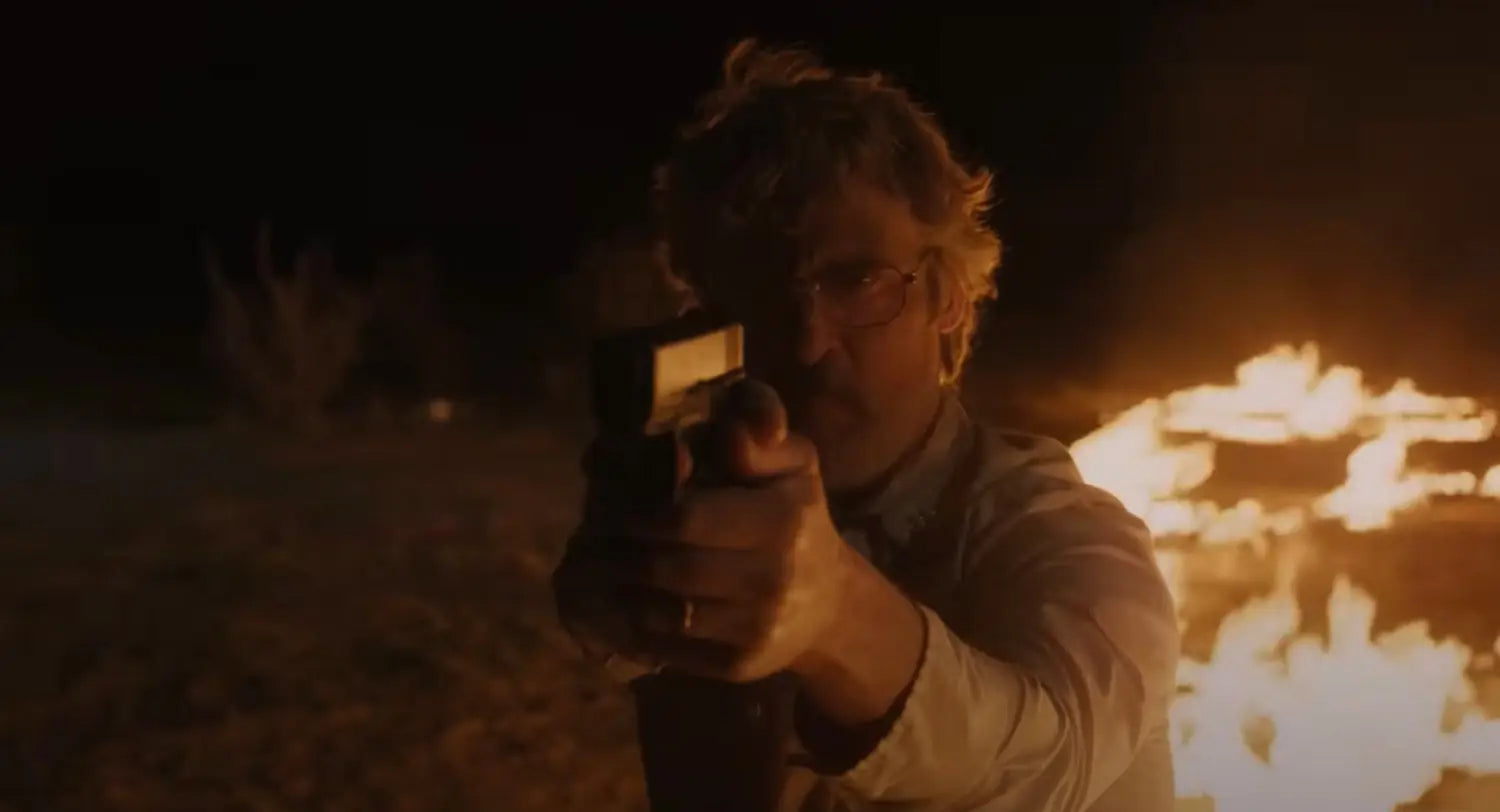
Visually, Eddington is striking without being showy. The desert heat makes everything hazy. The town hall looks like a stone-age throwback, part Flintstones, part fortress. The cinematography by Darius Khondji (Uncut Gems, Mickey 17) keeps everything grounded even as the narrative spirals into increasingly surreal territory. The final act goes full fever dream in the best way - bullets fly, people die, ideologies collapse, and Aster burns it all down with a grin.
Is it a little overlong? Sure. Does it lose its footing toward the end? A bit. Does that matter? Not really. What Eddington accomplishes is far more valuable than perfect structure - it captures a feeling that we’ve all been trying to forget. It forces us to sit in the madness again, to confront how close we came to breaking, and how many of us actually did.
There are plenty of scary movies out there, half of which have been inspired by the works of Aster himself over the past decade. Eddington is scary in a different way. It doesn’t deal in ghosts or demons. It deals in real, recent memory - twisted into art, but uncomfortably recognizable. It’s one of the boldest films of the year, and one of the funniest, and one of the most uncomfortable to sit through. Which probably means it’s one of the most important too.
‘Eddington’ is now playing in theaters.


