

Avatar: Fire and Ash, the third chapter in James Cameron’s groundbreaking sci-fi film series, is, once again, a genuinely transportive experience - the kind of cinematic spectacle that can only truly be felt via cutting edge big-screen technology. That feels increasingly rare in a continuing era of short form content churn and algorithmic stories delivered via streaming. Cameron, the multi-hyphenate entrepreneur behind films like Titanic and The Terminator, has always treated Avatar less like a traditional blockbuster franchise and more like an ongoing cinematic experiment, and even when that experiment falters somewhat in the storytelling department, the results remain staggering.
2009’s first record-breaking Avatar was proof of concept as far as Cameron’s vision of an all digital world and environment populated by motion capture performances. But 2022’s The Way of Water was the moment where the full emotional and technical potential of this world finally clicked into place. The effects were incredible throughout once again, but the story and its characters, especially the growing Sully family led by Jake (Sam Worthington) and Neytiri (Zoe Saldaña), finally felt like they matched the weight and beauty of the litany of astounding visuals. If the first film failed to really get you to invest in the saga of Pandora, I urge you to give its superior sequel a try.

Fire and Ash exists in a slightly stranger space: familiar to a fault at times, yet still capable of awe, heartbreak, and a sense of immersion that few storytellers alive today can replicate. There’s an undeniable déjà vu quality to Fire and Ash. Structurally and thematically, it often mirrors The Way of Water so closely that it becomes impossible not to notice. Children are kidnapped, rescued, and kidnapped again. Nature is ultimately pushed to rise up in violent defiance of human exploitation. Recurring bad guy Quaritch (Stephen Lang, tremendous once again) remains a constant, complicated threat, caught between his “oorah” programming and an emerging, deeply uncomfortable humanity (or Na’vi…nity?).
Kiri (Sigourney Weaver) continues to explore her profound connection to Eywa, while Lo’ak (Britain Dalton) once again struggles to define himself outside the shadow of his father and brother; the latter of whom the entire Sully family is still deep in mourning for. Neytiri grapples with her hatred for the humans whilst having part-human children herself. Jake struggles to figure out his next move in keeping his family safe. Even the extended climactic action finale feels like a remixed version of its predecessors’ to varying degrees. And yet, somehow, it still mostly works. Way of Water was pretty damn great, after all.
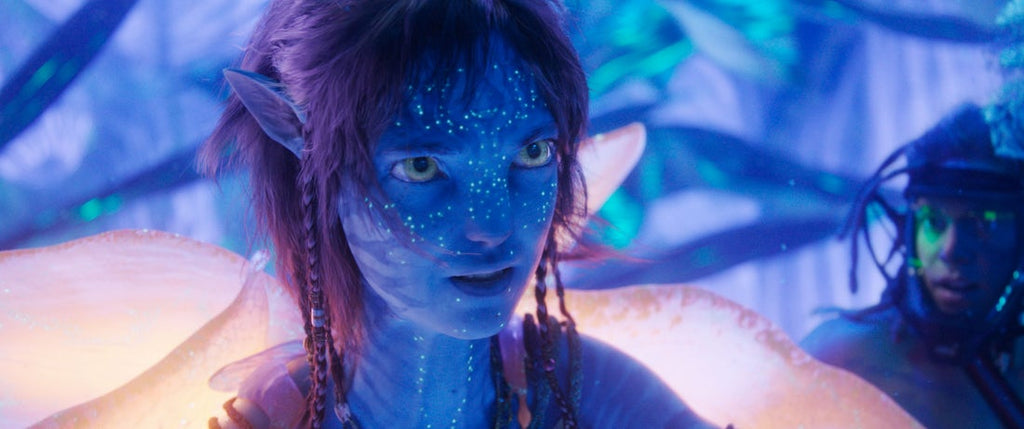
Part of that is because Cameron remains unmatched when it comes to pure movie theater immersion. The technical achievements here, especially when the film is viewed in formats like 3D, IMAX, or Dolby Vision, are nothing short of astonishing, even by Avatar standards. Fire and Ash pushes the visual language of this universe forward in ways that feel both intuitive and revolutionary, from the volcanic, smoke-choked environments of new villain Varang (Oona Chaplin) and the fire Na’vi clan to the vertigo-inducing expanses occupied by the Wind Trader people. Every frame is dense with texture, movement, and life. Pandora doesn’t just look real; it feels lived-in, reactive, and spiritually alive in a way that modern digital filmmaking often struggles to achieve. However you may end up feeling about the story, there’s no denying that, from the first frame to the last, you are completely transported.
But of course, spectacle alone has never been enough to sustain these films, and Cameron understands that better than most. What continues to separate Avatar from its would-be imitators is its sincerity. Cameron is not afraid of big emotions, clear moral stakes, or environmental allegory on a devastatingly raw scale. The real-world parallels here are not subtle, nor are they meant to be. At one point, Jake (Worthington delivering truly underrated work again) bluntly articulates one of the central theses of the entire saga: if humans are not driven off Pandora for good, they will just keep coming until they destroy it the same way they destroyed Earth. It’s a line that could feel heavy-handed in lesser hands, but within the emotional and spiritual ecosystem Cameron has built, it lands with clarity and conviction.

The introduction of the volcano-dwelling Mangkwan Na’vi and their fierce, volatile leader Varang is one of the film’s strongest additions, offering a compelling new dynamic that challenges the idea of Pandora as a purely harmonious paradise. She makes for an effective and thematically rich pairing with Quaritch, embodying a different kind of extremism born not from colonial greed, but from survival, rage, and historical trauma. Unfortunately, this storyline feels somewhat truncated by the film’s end, with Varang and her clan drifting to the margins just as they become most interesting. It’s clear Cameron is playing a long game here (as of now there are still at least two more Avatar films planned for the future) but the lack of full resolution on this and other certain threads is noticeable.
Where Fire and Ash truly feels fresh, however, is in its continued exploration of Spider, played once again with remarkable depth and charm by Jack Champion. The decision to push his arc toward a deeper, more literal connection with Pandora - not through an avatar, but as a human - is one of the film’s boldest and most intriguing ideas. It expands the franchise’s central question of belonging and identity, further suggesting that connection to Eywa and the planet at large is not purely biological, but spiritual and ideological. These moments, when the film steps outside its established rhythms and dares to evolve and challenge its mythology, represent its highest highs.
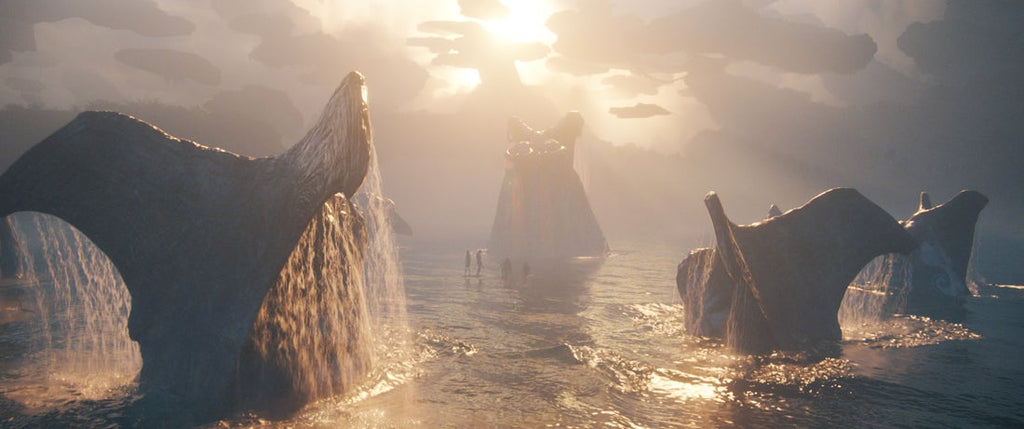
If Fire and Ash is less structurally elegant than its predecessors, it’s also no less earnest. There’s a feeling throughout that this is still a middle chapter (a continuing bridge rather than a destination) and while that occasionally leaves the film feeling incomplete, it never robs it of momentum or emotional profundity. Even as familiar patterns repeat themselves, the sincerity, scale, and craft on display make it hard to resist.
In the end, Fire and Ash may not reinvigorate the franchise as thoroughly as The Way of Water did, but it reaffirms why this experiment still matters. Very few, if anyone else is delivering blockbuster action with this level of technical ambition, emotional openness, and unwavering conviction. And even when Pandora and its problems start to feel familiar, Cameron still knows how to make them alive and important. Like its predecessors, Fire and Ash is a film I didn’t want to end. Not because it’s some flawless masterpiece, but because it believes, without irony or apology, in the power of cinema to transport us somewhere else entirely - and change us forever.
'Avatar: Fire and Ash' arrives exclusively in theaters December 19th.


