

Gunfighter Paradise, the latest film from writer / director / star Jethro Waters (F11 and Be There), is a sweaty, rambling, and darkly funny satire that feels delivered from the passenger seat of a pickup truck idling somewhere off a rural Carolina backroad. This is a sardonic, slow-burn satire that blends horror and hangout vibes into something both deeply personal and faintly unhinged. Whether you love it or hate it or are simply puzzled by it, it’s not likely that you’ll see anything else quite like it.
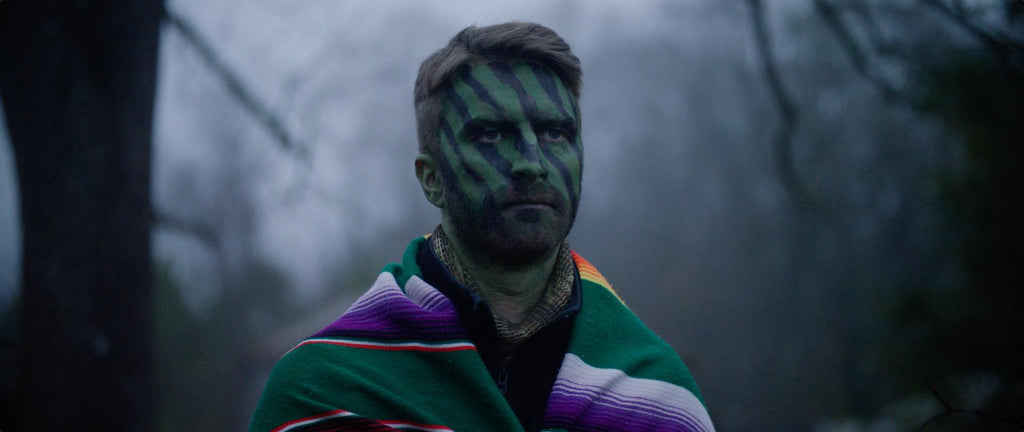
Waters (credited under the alias of Braz Cubas) plays Stoner, our camo-facepainted narrator and resident philosopher of the gun range. Introduced in voiceover with lines like “Gun smoke smells just like campfire and sex,” Stoner wastes no time letting us know the kind of bluntness he operates by. He’s a man raised on firearms, Southern living, and a specific strain of Christian guilt that insists “anything that feels good on the body is bad on the soul.” The film takes those contradictions of pleasure and punishment, patriotism and piety, violence and virtue, and lets them fester as the film rolls on in its own hazy way.
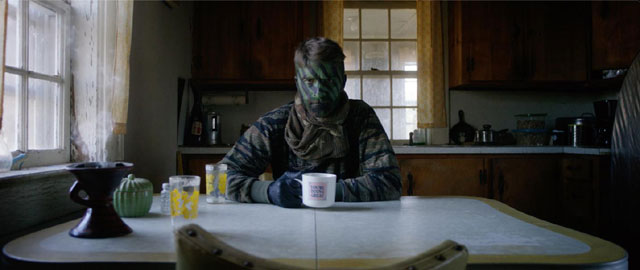
Waters’ own director’s statement calls the film a satire about “the cultural Frankenstein of irreconcilable American ideologies,” and that feels exactly right. Growing up in North Carolina with a Vietnam vet gunsmith father and a progressive, spiritually open-minded mother clearly left its mark on this particular storyteller, and he implements that directly into the character of Stoner. That split between biblical literalism and compassionate pluralism runs through every frame of Gunfighter Paradise. It’s a movie that understands the language of Southern Christianity intimately, and it uses that fluency to dissect it.
Despite how he may look throughout the film, Stoner is not a strange caricature (at least, not entirely) but a man in crisis. A shooting instructor who never quite made it into the armed forces like his father, he carries visible shame about that perceived failure. He carries guns too, of course, often multiple at once, of various sizes, like extensions of his own fractured identity. When his mother dies while he’s away, something inside him loosens. And when he begins hearing what he believes to be the voice of God - portrayed here as a guttural, distorted command to “TAKE CARE OF BUSINESS” delivered over flashes of extreme imagery - that loosened thread begins to unravel completely.
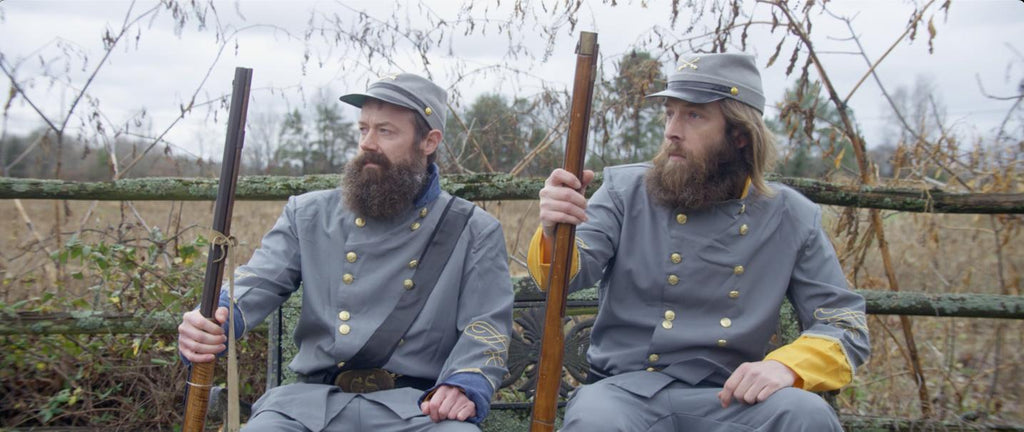
As serious as that may sound, the sense of humor in Gunfighter Paradise is frequent, bone-dry and often absurd. Two lost Confederate reenactors (Michael Kraft & Rob Hinkle) casually wait around for a ride inside Stoner’s house in full uniform, as if that’s the most natural thing in the world. A mummified cat named Eugene is discovered and lovingly restored with jewel-like replacement eyes before being displayed on the mantle. These excursions could feel random in lesser hands, but Waters keeps the unique tone so unwavering that the surreal becomes strangely grounded.
At its heart, the film becomes a bizarro buddy hangout between Stoner and his old friend Joel (Joel Loftin), the local cable guy who stops by and quickly realizes his face-painted childhood pal is truly spiraling. Joel decides to stick around, telling his wife that “the dude needs someone to help reel it in.” Their scenes together, which consist of riding around rural backroads, engaging in a legitimate crash course in gun safety, or simply talking through Stoner’s mounting delusions, give the film a genuine human center. Joel’s quiet warmth, and his surprisingly beautiful singing voice, provide the closest thing this movie has to real grace.
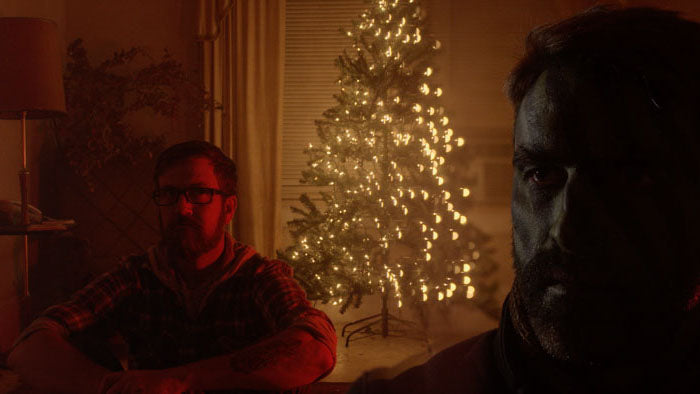
Meanwhile, a blank-faced killer adorned with a crucifix necklace stalks the edges of the story, committing heinous acts that feel like manifestations of the ideology the film is interrogating. Religious iconography is repeatedly juxtaposed with rows of ammunition. God and guns sit side by side here. Stoner himself insists he believes in God but rejects organized religion outright. “Make no mistake, God is real, but you ain’t ever gonna find him in a place like that,” he tells a young neighbor who invites him to church.
Waters and his team have a sharp ear for sound design - the metallic clink of bullet casings hitting the ground is rendered with almost fetishistic precision - and they embrace the slow, atmospheric pacing even as the third act edges closer to more traditional thriller territory. Even still, the film refuses to fully abandon its meditative mood, preferring to linger in discomfort rather than sprint toward conventional catharsis.
The result clearly won’t be for everyone. It’s talky, strange, and often feels like it’s asking you to mull along with its ideas rather than be entertained in any traditional sense. But that’s also its strength. Gunfighter Paradise isn’t interested in easy answers. It’s a love letter to the contradictory poetry of the South and a warning about what happens when faith curdles into fanaticism in any sort. It understands how someone can be terrifying and loving in the same breath, just as Stoner describes his father.
By the time the dust settles, what lingers isn’t the violence, but the melancholy. The sense that Stoner, and maybe America itself, is stuck between competing spiritual languages - fluent in both, comfortable in neither. Waters doesn’t preach. Rather, he observes, jokes, and winces in equal measure. In doing so, he crafts a strange, singular cinematic gem that feels as combustible as the ammunition lining its frames.
'Gunfighter Paradise' is now playing in select theaters.


