

One of the most exciting things about Dan Trachtenberg returning to the Predator franchise is seeing what happens when a filmmaker genuinely interested in pushing boundaries is handed the keys to a series that too often settles for recycling the same ideas. 2022’s Prey reboot was a shot of adrenaline because Trachtenberg treated the material like it was new - ditto for his animated Predator: Hunter of Hunters film, which holds some of the most inspired action sequences of the year. Predator: Badlands feels bold for the same reason. Even though it’s a massive studio sequel, it moves with the confidence of someone determined to complicate and expand the mythology instead of coasting on it. This is a Predator movie told almost entirely from the Predator’s point of view, and the wildest part is how well that ends up working.
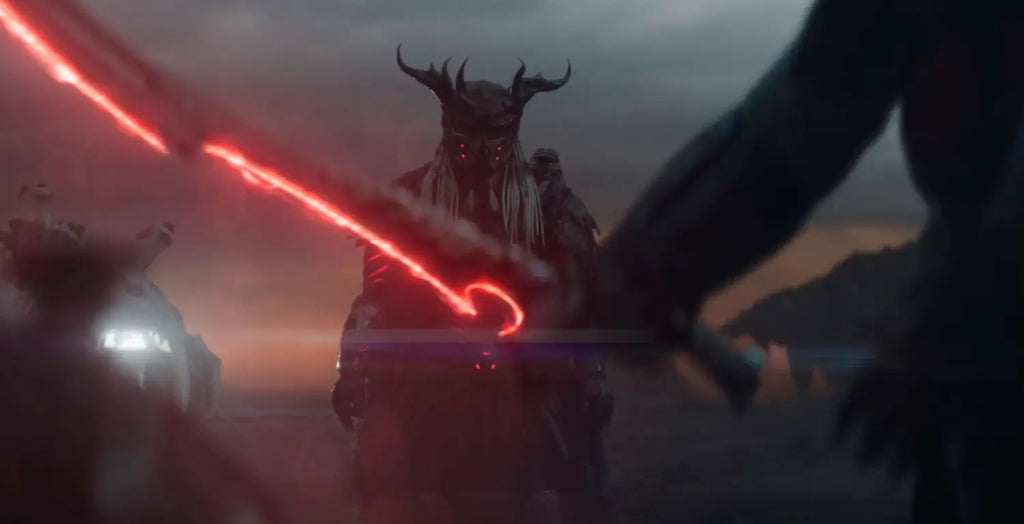
What anchors the film is our main character Dek, played with tremendous physical and emotional clarity by Dimitrius Schuster-Koloamatangi. He’s the runt of his Yautja clan - the small one who keeps failing the deadly physical tests that his father (Reuben de Jong) insists will make him a “true” Yautja. Dek’s desperation isn’t pathetic; it’s immediately sympathetic. You can feel the weight of expectation sitting on him like armor he never asked to wear nor could ever fit into. That father-son dynamic is harsh even by this franchise’s standards, and Trachtenberg doesn’t shy away from showing the cruelty embedded into this culture. The Yautja way is to cull the weak, but when Dek’s older brother Kwei (Mike Homik) opts instead to give his sibling a final chance to prove himself, it becomes the emotional engine that powers everything that follows.
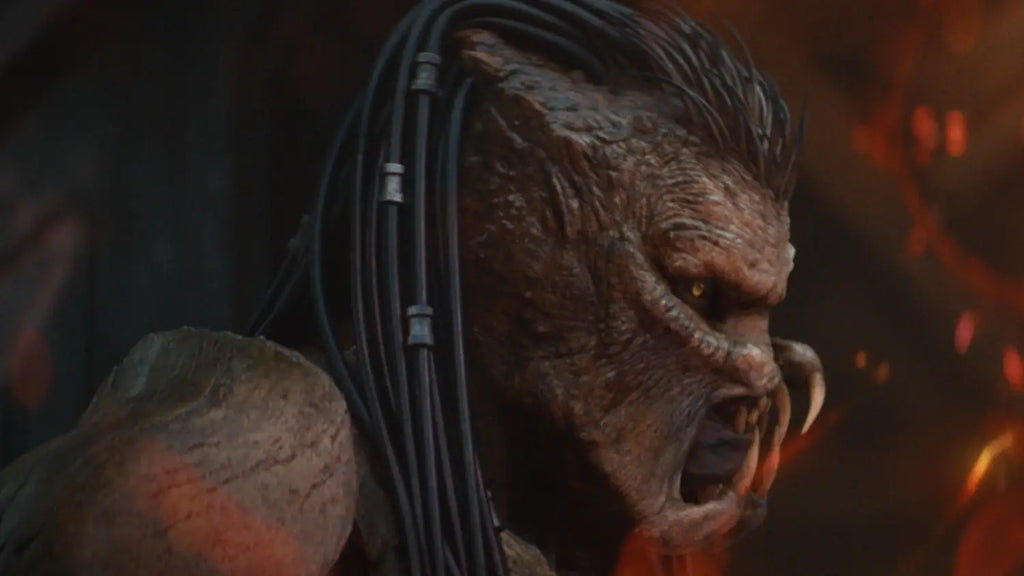
Dek’s banishment to the hostile planet Genna is framed as a death sentence. Filled with razorblade-like grass and countless deadly creatures and plants, it’s a place only a fool or someone with way too much to prove would willingly descend into. And yet Trachtenberg films his arrival there with a sense of awe. There’s an extended long take of Dek falling through the atmosphere that feels downright operatic, the camera almost hypnotized by the scale and danger of what he’s heading toward. It’s the exact kind of giant IMAX screen flourish he didn’t get to play with on Prey or Killer of Killers as much thanks to their streaming releases, and boy, does he make the most of it.
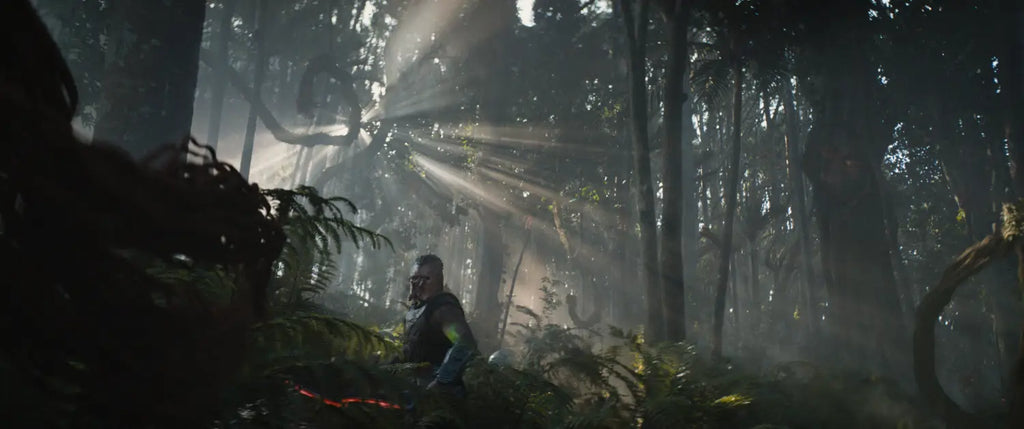
Genna itself is a fun, nasty little world. Everything wants to kill you, or eat you, or use you for some unknowable biological process. The production design on the alien creatures and terrain is consistently strong for such a familiar and overstuffed concept. Even when the CGI wobbles, the ideas underneath are vibrant. And it’s here that Dek meets one of the most delightful surprises of the entire franchise: Thia, played with exceptional charm by Elle Fanning.
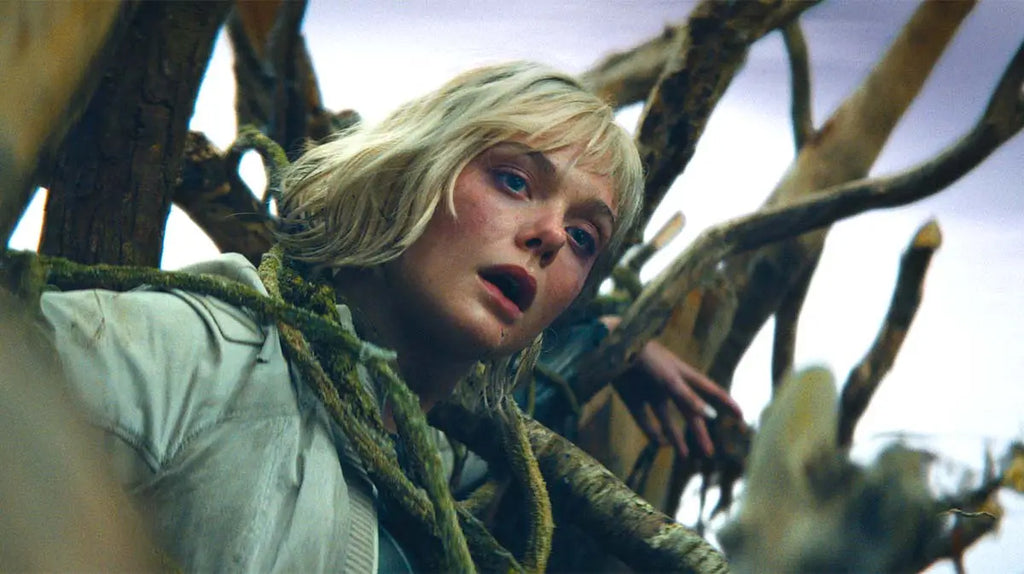
It’s honestly wild that it’s taken this long for Fanning to be plugged into a franchise spectacle like this, because she handles it with natural ease. Thia is a Weyland-Yutani synthetic from the Alien franchise (surprise!) who exists in a bizarre state of being both disassembled and relentlessly cheerful. She’s been trapped on the planet for who knows how long, missing her entire lower half and crawling across the ground like a practiced gymnast. She saves Dek from a creature within moments of meeting him, and the two settle into a wholly unique buddy-comedy rhythm so naturally you almost forget this is a Predator movie…or a strange unofficial third entry in the Alien vs Predator mashup series, if you’d like.
Fanning gives Thia a bright, endearing weirdness that balances perfectly against Dek’s guarded seriousness. She asks questions he doesn’t want or know how to answer, she misreads social cues he’s barely aware exist, and she chips away at his hard-drilled assumptions with disarming optimism. Trachtenberg and fellow screenwriter Patrick Aison smartly avoid making her the “quirky exposition machine” that sci-fi often leans on synthetics to be. Instead, she becomes the beating heart of the film: the person (or thing, depending on who you ask) who challenges Dek’s entire worldview.
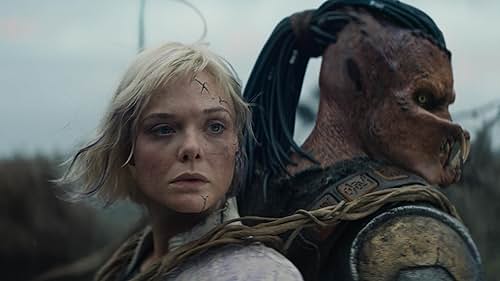
It helps that Thia’s story is tethered to her twin-synth sister, Tessa (also played by Fanning in a dual role that mirrors the work of Michael Fassbender in Alien: Covenant), who’s been sent to collect the Kalisk, a legendary beast that Dek himself is hunting. Their bond mirrors Dek and Kwei’s, except Thia and Tessa were literally built to work together, not torn apart by the expectations of their creator. The emotional echoes between the Yautja brothers and the synthetic sisters aren’t subtle, but they’re definitely effective, and they give the film a thematic throughline stronger than anything the franchise has ever really attempted before.
This story is about breaking cycles, especially the violent ones. It’s about refusing to become what someone else has designed you to be, whether that’s a warrior, an emotionless killer, or a corporate tool. Thia tells Dek, “We can be more than what they ask of us,” and the film treats that sentiment like gospel. The Predator and Alien franchises have flirted with evolution before, but never this sincerely. Dek’s gradual shift from lone survivalist to hearty protector works because it feels earned - he doesn’t become softer, he becomes fuller. He becomes someone who fights for others, not just for a status that’s been imposed on him by others.
The action is strong, frequently clever, and always rooted in character. The introduction of a monkey-armadillo creature who becomes part of Dek and Thia’s makeshift family is pure joy - what could have been an easily misguided choice quickly becomes a little burst of creature-feature charm in between the heavier beats. And when Thia’s bottom half returns for the finale in a manner I won’t spoil, the film leans into a burst of physical comedy and kinetic chaos that doesn’t simply work, but thrives in its own originality.
What doesn’t always work is the broader aesthetic. There’s a muted, dusty color palette that occasionally flattens the world instead of enriching it, and you can feel the strain of the film’s CGI-heavy climax among the other numerous action sequences. A lot of the story beats are predictable as well. Satisfying, sure, but telegraphed in the way big franchise arcs often are.
Still, what sticks out is how emotional the film is willing to be. For a movie with technically no humans in it at all, Predator: Badlands is shockingly heartfelt. The central trio of Dek, Thia, and their little creature companion they dub “Bud”, forms a believable found sci-fi family, one forged not just out of survival but genuine affection. This isn’t a story about dominance; it’s a story about choosing another, better way.
Even with its imperfections, Badlands succeeds because Trachtenberg clearly cares. He cares about character, he cares about world-building, and he cares about giving this franchise a new point of view worth following. Dek might be the first Predator we’ve ever rooted for this intensely, and by the end, you genuinely want to see where the story goes next. For a series long defined by hunters and hunted, it’s refreshing to get a film about something else: the courage to change, and the grace to let others change with you.
'Predator: Badlands' is now playing in theaters and coming soon to digital.


