

There’s been no shortage of Yuletide carnage in the decades since the original Silent Night, Deadly Night upset enough parents in 1984 to get itself yanked from theaters. Christmas horror is practically its own subgenre now, and the killer Santa iconography has been wrung through every degree of fright, fun, or straight-up sleaze imaginable. Which is why a full-scale reboot of this notoriously nasty slasher franchise instantly raises the question: what’s left to do? What angle could possibly feel fresh in a canon that’s given us everything from killer Kris Kringles to demonic elves to snow-drenched slashers with body counts higher than mall Santa appearances?
This new Silent Night, Deadly Night from writer and director Mike P. Nelson answers that question with an unexpected blend of reverence and reinvention. It remixes familiar frights, reshaping the story around different beats, and aims for something closer to a twisted antihero journey than the brutally tragic slasher descent of the original. It doesn’t always work, and often works against itself, but there’s a strange sincerity beating under its icy surface.
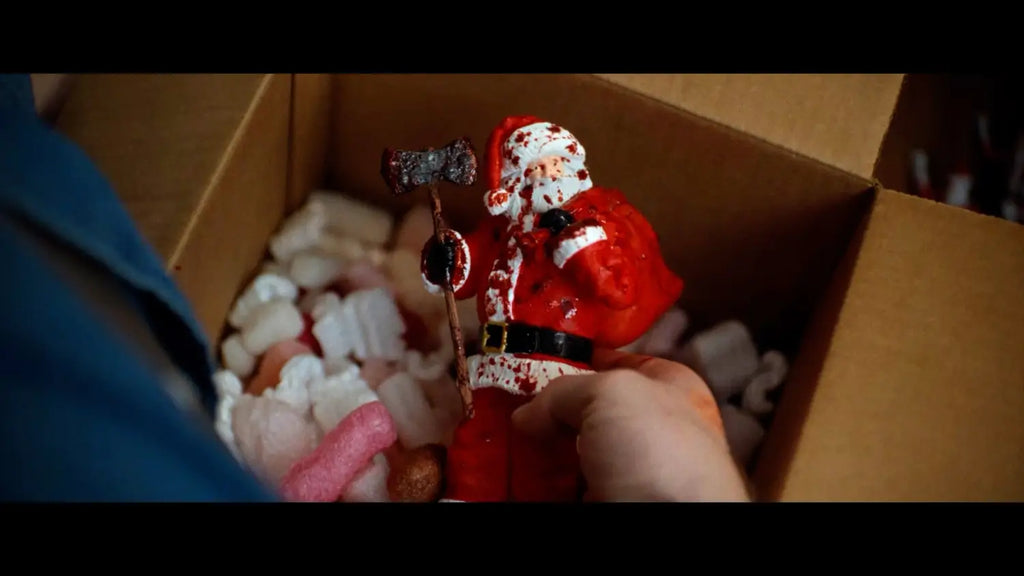
Like the first film, the story is rooted in the psychological scarring of little Billy Chapman. The original’s first half remains its secret weapon: more sad than scary, a bleak portrait of an unlucky kid crushed by yuletide trauma until the inevitable break. The reboot carries that same melancholy DNA initially. Billy’s visit to his grandfather still kicks things off, only this time the old man suddenly pukes blood and dies right in front of him. That’s followed by a somber nighttime drive home that ends with a random, Santa-clad act of highway violence that leaves Billy orphaned and psychologically scarred.
We then jump ahead to an adult Billy, played by Rohan Campbell in a neat bit of meta casting given his stint as a sort of Michael Myers successor in Halloween Ends. He wakes up in a motel room with a dead guy in the bathroom, already fully entrenched in a murder routine he only dimly understands. He’s guided by a gravelly voice in his head (Mark Acheson), and the film drops us into his life mid-carnage with zero hand-holding. Billy hops on a bus to escape the police, reflecting on the Christmas Eve that shattered him, and the movie settles into a solid countdown structure: December 20th through the 25th, each day bookmarked with dreams or flashbacks revealing more of his past.
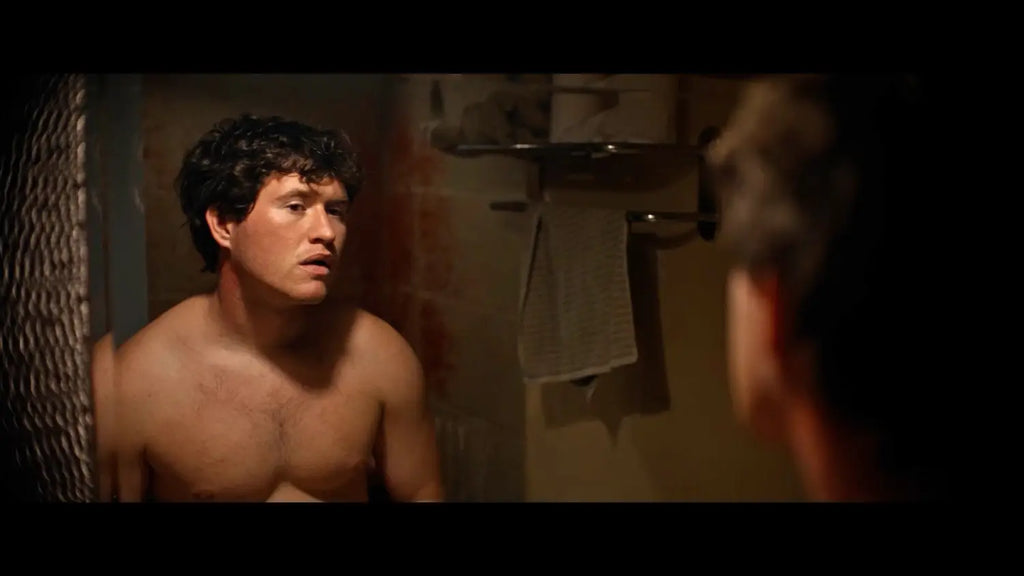
This framing is one of the few places the film feels confidently structured. Everything else is considerably shakier. The tone in particular is all over the place, oscillating between somber trauma drama, vigilante thriller, soft rom-com, and borderline goofy slasher. The movie can never really decide whether Billy is a tragic figure, a righteous executioner, or the star of a Hallmark-esque holiday romance. Sometimes he’s all three in the span of five minutes. A scene of Billy’s co-worker and love interest, Pam (Ruby Modine), beating up a child bully is staged with sitcom levity, but the very next scene depicts her abusive cop ex-boyfriend oozing domestic-violence menace. It’s whiplash in a way that doesn’t work.
Billy and Pam’s chemistry is surprisingly charming, if oddly out of place. Critics calling this a Hallmark movie with a slasher icing on top aren’t totally wrong, as every scene between these two plays like a cozy holiday romance abruptly interrupted by the reminder that our protagonist kills people with an axe. “Doing a bad thing doesn’t make you a bad person,” becomes a kind of thesis for Billy, and the movie leans into framing him as a moral avenger rather than a slasher villain. He only ever takes out abusive figures, dangerous predators, and, in one of the film’s wildest action detours, a whole Nazi Christmas party.
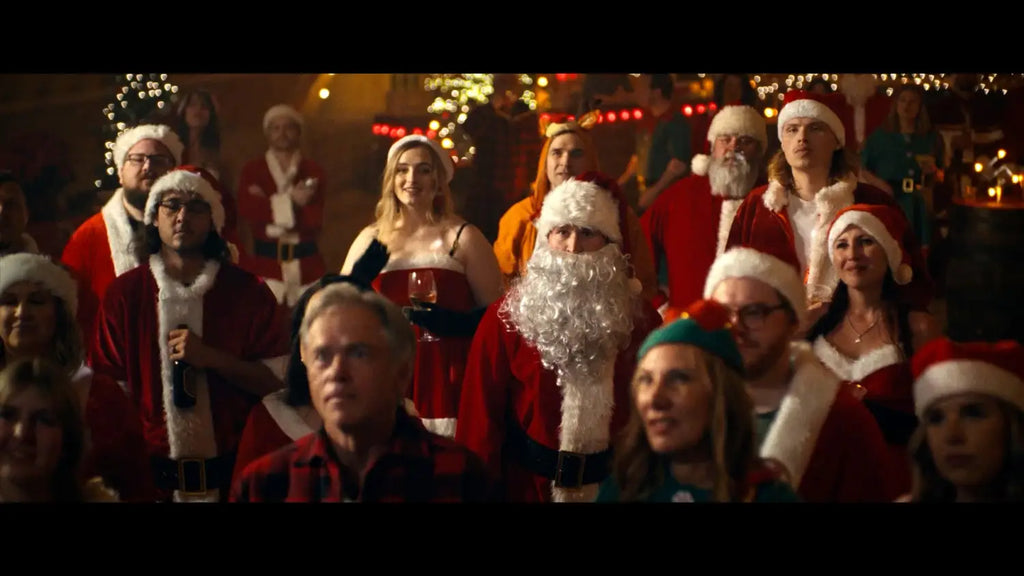
But the vigilante angle introduces a new problem: the movie wants us to root for Billy far more openly than the original ever did, but it doesn’t fully earn the righteousness it tries to bestow on him. Some of his early victims don’t seem all that deserving of a slasher-movie death sentence. Others are such easy targets (read: Nazis) that the film feels like it’s scoring cheap points. It shallowly gestures toward themes of justice, trauma, and the mythos of Santa as an arbiter of “naughty or nice,” but the ideas are sketched rather than explored. Still, the movie isn’t without interesting touches. There are some fun nods to the original sprinkled throughout, and the town’s children whisper about “The Snatcher,” a folkloric child-stealer whose presence hints at a serial-killer-versus-serial-killer showdown by the finale - even if the name brings Black Phone to mind more than anything.
What becomes increasingly clear is that this reimagining wants to be very different from its predecessors, and fans will have to view them as separate entities entirely. Where the first film was grim, a bit sleazy, and weirdly earnest about compounded trauma, this one is more scattered, and heavily invested in its romance plot. It flirts with wild ideas (Dexter-meets-Venom energy) but struggles to commit to a tone long enough to make any of them resonate. The film’s attempts to grapple with heavier themes feel largely weightless. It’s all there, but none of it hits with the raw impact of the 1984 version.
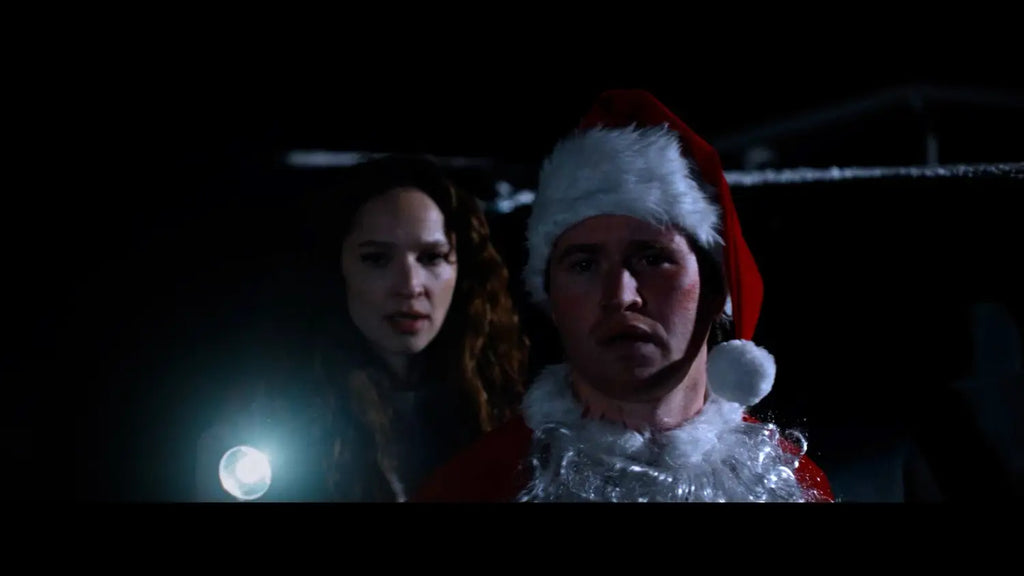
In the end, Silent Night, Deadly Night (2025) is an oddly earnest, often clumsy, occasionally compelling holiday slasher that never quite finds its identity. It has flashes of something bold: the Christmas countdown structure, Campbell’s layered performance, the twisted rom-com energy, the subversion of Billy as a full-blown antihero. But it’s also a rough, frequently dull watch, and it struggles to keep your attention even as it swings between tones like Christmas lights on the fritz.
Different doesn’t always mean better, and in this case, the reboot’s ambitions are far more interesting than the film itself. But at least it’s not just another lazy retread of the well-worn Killer Santa trope that the original helped establish. Even when it stumbles, it tries to carve its own path through the snow.
'Silent Night, Deadly Night' is now playing in theaters.


