

As the Sundance Film Festival wrapped up its final year in the snow-covered mountains of Park City, Utah, the event once again proved why it remains one of the most vital cultural touchstones for independent cinema. Alongside buzzy premieres of prestige dramas and intimate documentaries, Sundance’s Midnight section continues to be a home for bold, boundary-pushing genre filmmaking. This year alone brought audiences everything from the kiddie-show slasher Buddy to the unnerving, sound-driven dread of undertone, plus eerie, essential ghost stories like Rock Springs.
But amid all the new blood, Sundance also made room to honor one of its most enduring and influential alumni.
In 2004, Saw premiered at Sundance and quietly detonated a bomb under modern horror. Directed by James Wan and written by and starring Leigh Whannell, the low-budget, high-concept thriller didn’t just scare audiences - it reshaped the genre’s relationship with cruelty, morality, and aesthetic aggression. Two decades later, Saw is no longer just a film; it’s a full-blown cultural institution, one that helped define 2000s horror and launched a franchise that’s still rattling theater seats today.
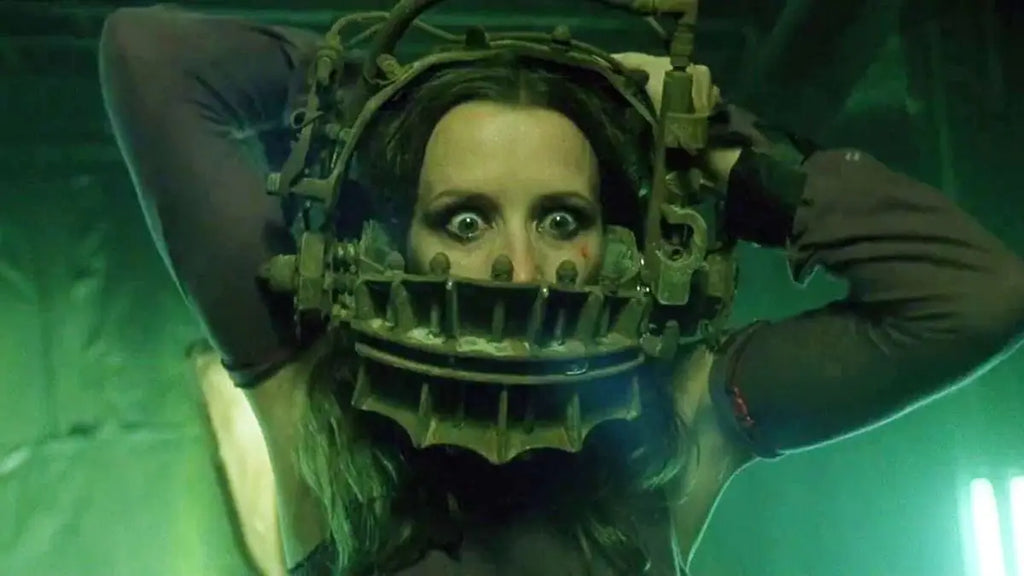
With news circulating that Wan and Whannell are reuniting for a back-to-basics revisit of the franchise, the timing felt perfect for the duo to return to where it all began. The anniversary screening of Saw at Sundance played to a packed house of diehards, first-timers, and fellow filmmakers, many of whom were too young to have seen the film during its original run. Watching it again in that environment only reinforced how singular its voice still feels.
A huge part of that voice, as the creators were eager to discuss, comes from Saw’s unmistakable sonic identity. The score by former Nine Inch Nails’ member Charlie Clouser is an industrial, metallic assault that feels tapped into the moment’s cultural bloodstream . Speaking alongside Wan and Whannell at Sundance was Blumhouse CFO Josh Small, who emphasized just how inseparable the franchise is from its sound.
“Charlie’s involvement is one of the iconic things about this franchise,” Small told us. “When we think about the future of the franchise, having Charlie around is part of what makes the DNA of Saw work. We’re excited for the opportunity to have Charlie be involved in whatever we do in the future.”
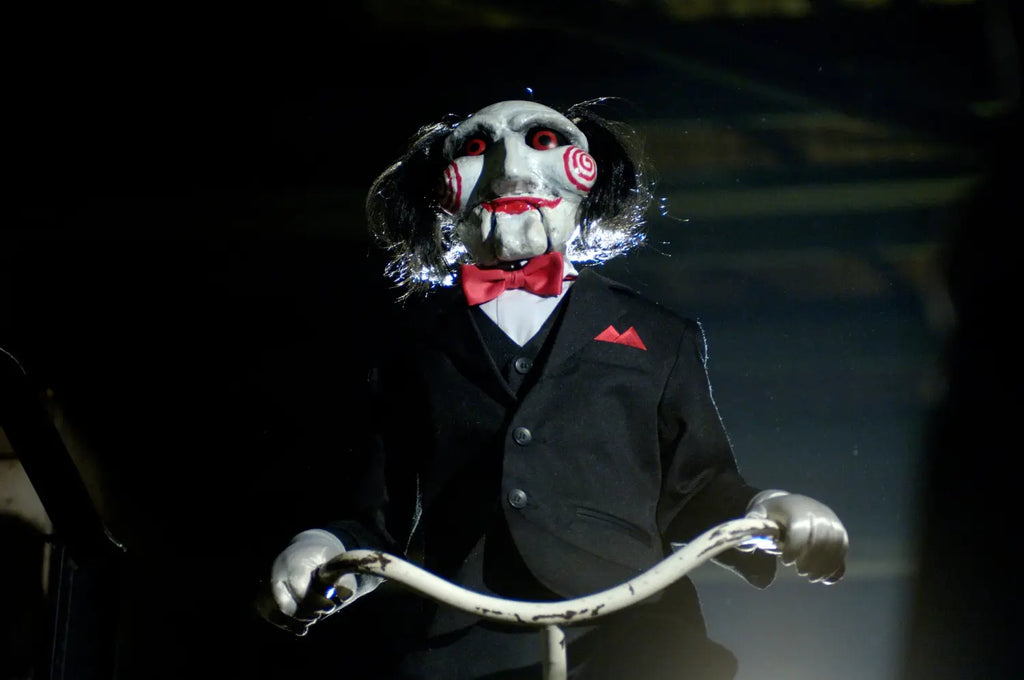
That DNA was baked into the project from day one. Wan explained that the film’s soundscape wasn’t an afterthought or a marketing-driven needle drop strategy; it was foundational to the entire creative process.
“We feel very lucky,” Wan said. “It was basically the style and aesthetic that we were going for during that period. A big part of the soundtrack dictated the movie that we were trying to make.”
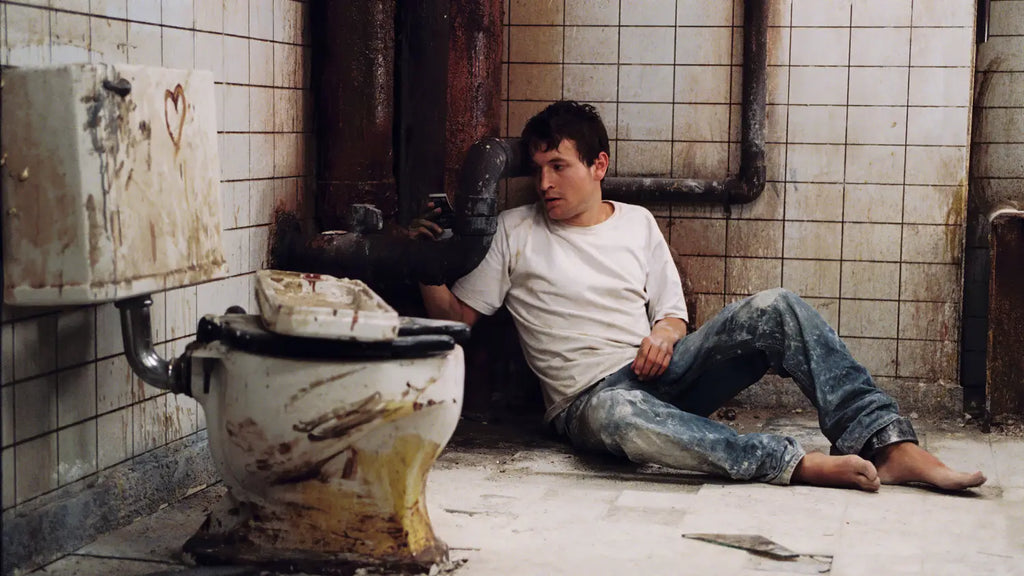
Whannell echoed that sentiment, noting that the industrial edge of the music mirrored the brutal physicality of the film itself. Rusted pipes, decaying tiles, and improvised torture devices demanded something harsher than a traditional horror score.
“Even the stuff we were listening to while we were writing and thinking about Saw was very industrial,” Whannell said. “That’s what the film was: very industrial. This guy is using rusty power tools, and it’s in this dirty bathroom. The film is grimy. And we wanted that grimy soundtrack.”
That grime extended beyond the score. The original Saw soundtrack famously featured bands like Fear Factory, Chimaira, Front Line Assembly, Illdisposed, and others, further aligning the film with the aggressive, mechanical pulse of heavy music at the time. For Wan and Whannell, landing Clouser felt almost surreal.
“We were listening to a lot of Nine Inch Nails at the time,” Whannell said. “So we couldn’t believe our luck that we got Charlie Clouser, a member of Nine Inch Nails, to do the soundtrack. It’s a highlight for us.”
Wan added that Clouser’s enthusiasm for the film only deepened that connection. “For Charlie to watch the movie and be so enamored by it meant a lot to us,” he said. “Plus that theme!”
Of course, that theme - “Hello Zepp” - has since transcended the film itself. What began as a late-film sting designed to flip the narrative on its head has become one of the most recognizable motifs in modern horror.
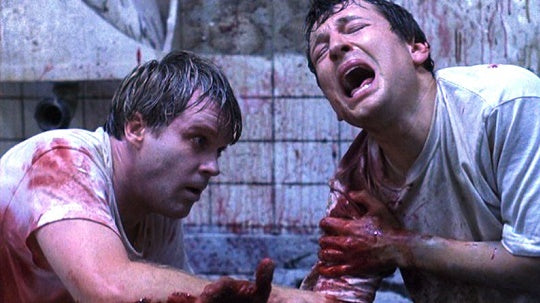
“The big, main theme, ‘Hello Zepp’, once those chords come out, come on,” Whannell said with a laugh. “It’s like the Jaws theme. It becomes part and parcel of the lexicon of the Saw franchise.”
Watching Saw again at Sundance's final year in Park City, surrounded by fans who know those chords by heart, it’s impossible to deny how fully the film succeeded in forging its own identity, one that is rooted as much in industrial noise and heavy music as in blood and twists. Twenty years on, Saw doesn’t just hold up. It still cuts deep.


