

Rian Johnson is a filmmaker I trust. I say that as a staunch The Last Jedi defender and advocate, someone who has seen every episode of Poker Face, and a critic who found himself a little heartbroken when Glass Onion failed to click after the near-instant classic status of Knives Out. That film’s cleverness felt overly smug, its humor more grating than sharp, and its social commentary more basic than illuminating.
So I approached Wake Up Dead Man with an unfamiliar trepidation - not about Johnson’s command of the murder mystery genre, which has never really wavered, but about whether his instincts for tone, humor, and thematic clarity would realign in the ways I fell in love with. Thankfully, Wake Up Dead Man (the third Knives Out whodunnit) doesn’t just realign them, but sharpens them into something angrier, more confident, and far more spiritually grounded than the series has ever been.
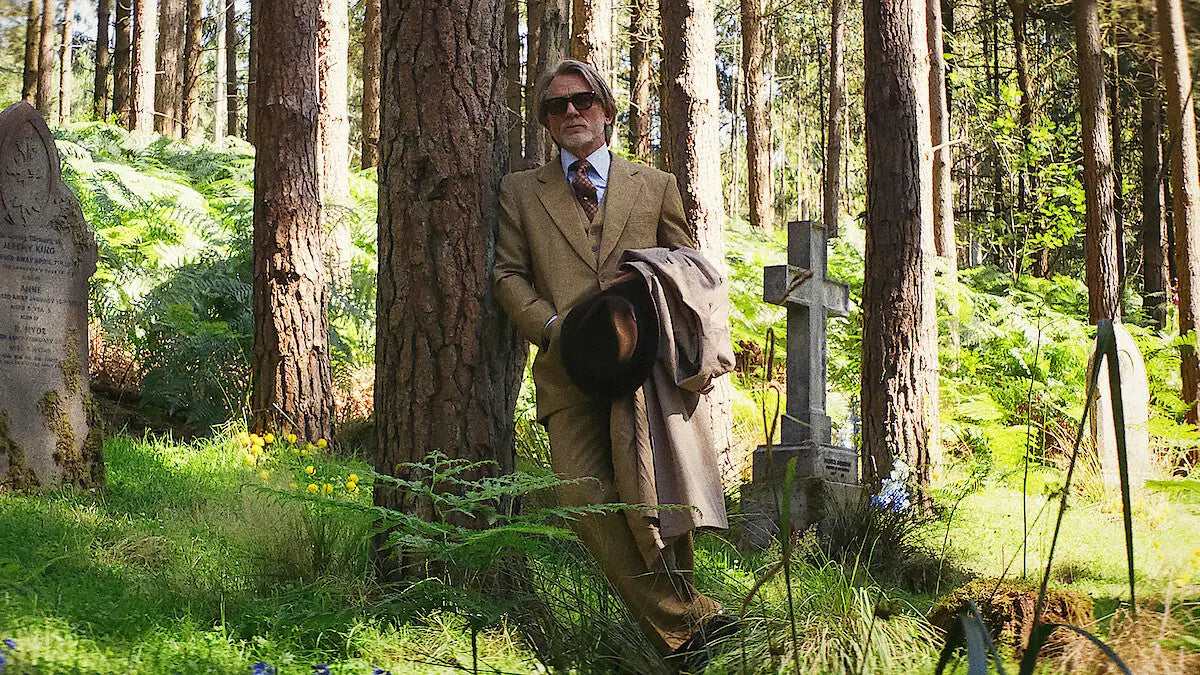
This third Benoit Blanc mystery immediately signals its intentions. While Blanc (Daniel Craig, once again delightfully unplaceable) remains a somewhat central presence, this time around he largely takes a backseat to the affairs. In fact, he doesn’t even show up until a good bit into the events of Wake Up Dead Man. The film’s true emotional anchor is Father Jud (Josh O’Connor), a former boxer turned priest whose complicated relationship with faith and morality becomes the film’s beating heart. Jud is assigned as an assistant to Monsignor Jefferson Wicks (a fiery and boisterous Josh Brolin), an eccentric and deeply corrosive religious leader who embodies everything Jud believes organized religion should not be: manipulative, power-hungry, and more interested in fear than hope.
When Wicks inevitably turns up dead, Jud becomes both the prime suspect for the police (led by Mila Kunis' Geraldine Scott) and Wick's devoted flock (which is made up of an all-star cast of Glenn Close, Jeremy Renner, Kerry Washington, Andrew Scott, Cailee Spaeny, Darlyn McCormack, and Thomas Haden Church). He's also the film’s most compelling moral lens. He opposes Wicks openly, challenges his methods, and represents a genuine threat to the carefully curated rage machine Wicks had built within his small but fervently loyal congregation. That dynamic - the desperate need for believers to believe, even when that belief is clearly being weaponized and profited off of - fuels the film’s most potent ideas.
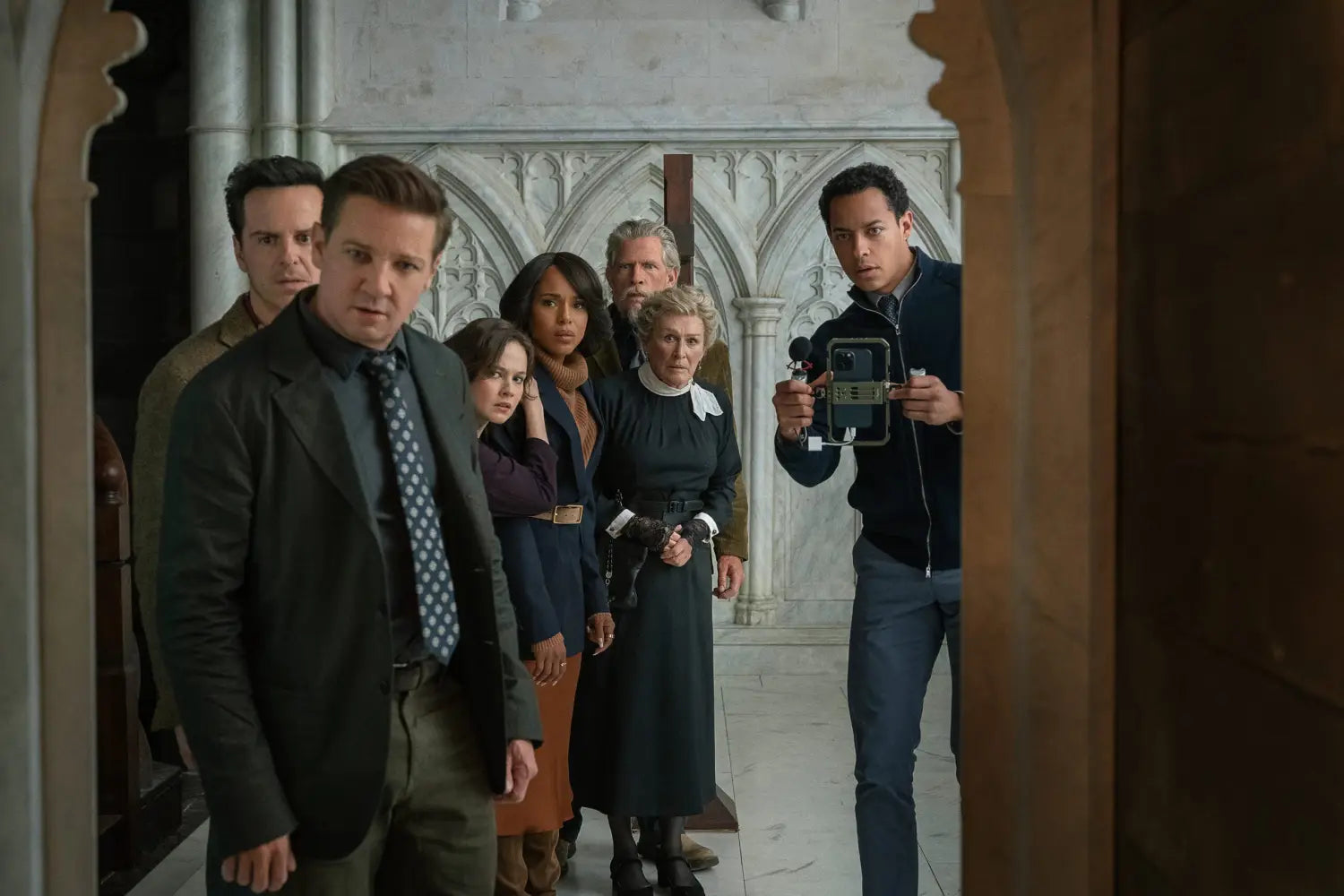
Johnson has never exactly been the subtle type of storyteller, but Wake Up Dead Man wears its bluntness like a raised fist. This is an angry movie, but a focused one, and refreshingly so. It’s a scathing takedown of modern organized religion, particularly the ways it’s embraced nationalism and bastardized faith into a tool for control, profit, and perpetual outrage. The film interrogates sermons as entertainment, miracles as branding opportunities, and guilt as currency. Its central mystery is less about who killed Wicks than about how many people needed him alive to justify their own moral rot.
That thematic weight is matched by a noticeable upgrade in the writing. The humor, which can often be Johnson’s weakest element, lands more consistently here than in either previous outing. Wicks forcing Jud to take his increasingly appalling confessions is genuinely hilarious, and a gag involving Blanc’s car blasting the Cats soundtrack is a pitch-perfect moment. Even better is a killer line from Blanc himself: “This was dressed as a miracle, but it’s a murder, and I solve murders.” It’s sharp, funny, and shows both the character and story’s focus.
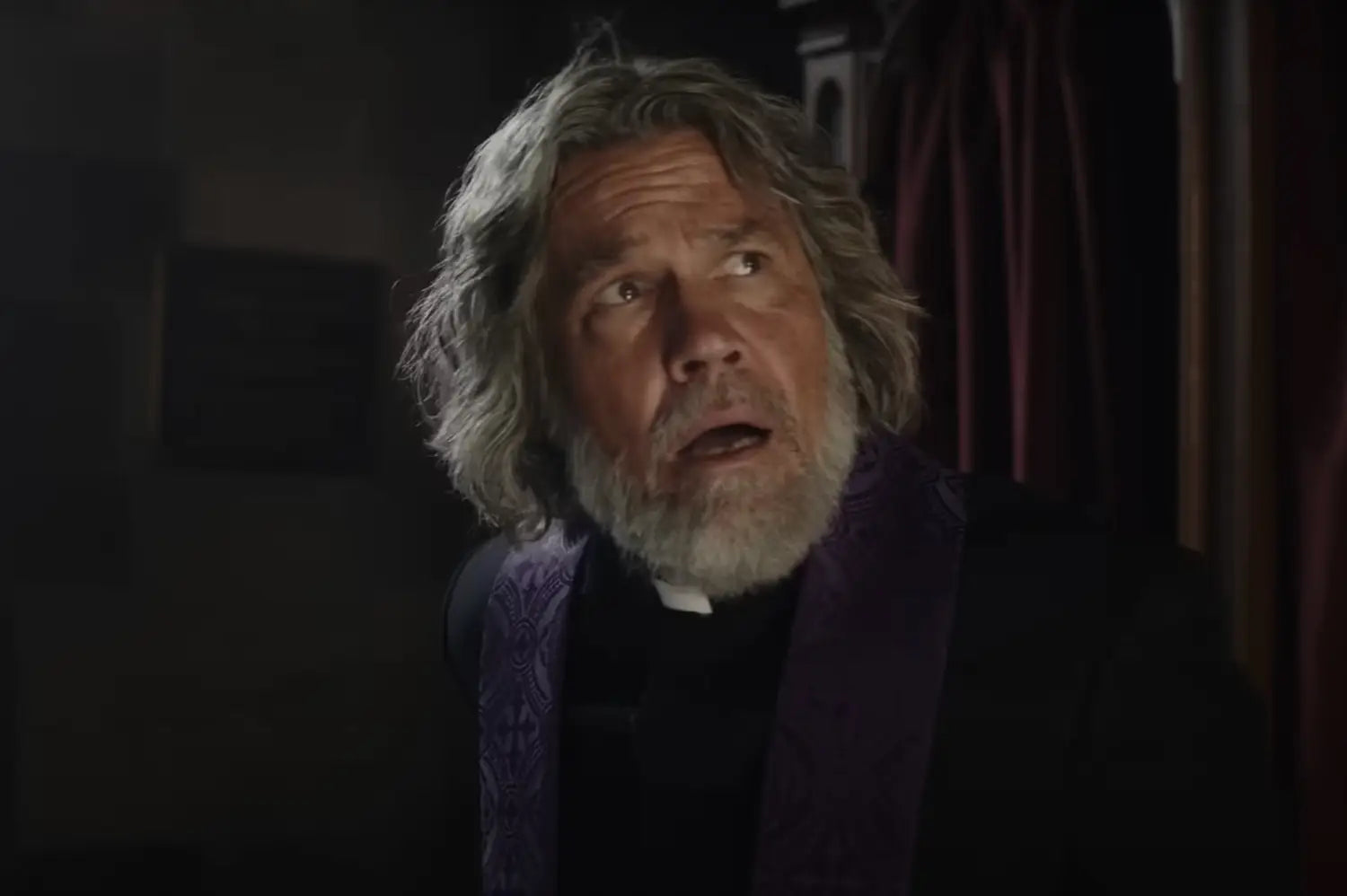
Visually, Wake Up Dead Man is exceptionally stunning to look at. Johnson’s frequent collaborator Steve Yedlin delivers the best cinematography the series has ever offered, turning church interiors into shadowy battlegrounds of good versus evil, and exteriors as timeless places of spiritual reflection. The film’s second half leans hard into stylistic flourishes and escalating reveals, sometimes to its betterment and other times to its detriment. While the mystery remains genuinely perplexing (one of Johnson’s toughest puzzles to date) the momentum doesn’t quite maintain the first half’s grip. Blanc even appears to struggle alongside the audience, which is thematically interesting but occasionally deflates the tension.
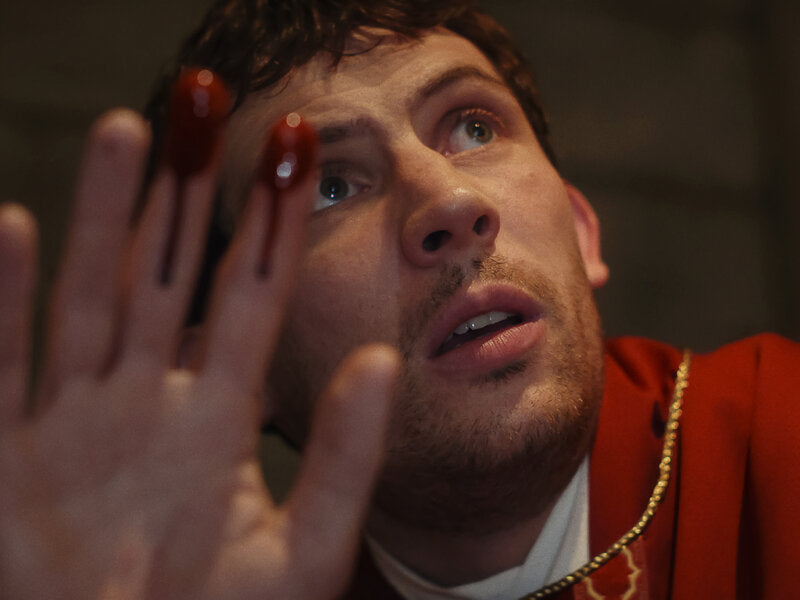
Still, the performances carry the film through its rough patches. Glenn Close’s performance as Martha, the church’s caretaker and Wicks’ most stout believer, is phenomenal, almost stealing the entire movie and emerging as one of the only supporting characters given enough room to feel fully realized. It’s O’Connor, however, who proves himself to be a genuine leading man among this A-list Hollywood cast. His Father Jud is awkward, wounded, righteous, and quietly furious; a man trying desperately to reconcile goodness within a system designed to crush it. He’s one of the best actors of his generation working today, and this performance cements him as that. It’s no wonder that Steven Spielberg has him starring in his next major feature.
Not everyone fares as well, however. Vera (Washington) is given intriguing nuance but fails to end up in a satisfying place, while Spaeny’s (Civil War, Alien: Romulus) turn as a disabled cellist feels wholly underserved. Though that may be intentional, reinforcing how disposable some believers become within corrupt systems. The rotating cast of suspects is occasionally engaging but not exactly memorable. That said, the institution is the villain here, not just its members, so the lack of depth for everyone isn’t exactly a dealbreaker.
Letting Blanc, the one and only recurring character in the Knives Out series, step slightly into the background in favor of Jud is a masterstroke. It helps ground the film and allows Johnson to wrestle directly with his own complicated feelings about religion, community, God, and the church’s role in shaping our current cultural moment. The result is a sequel that feels urgent rather than clever, and sincere rather than smug.
Wake Up Dead Man isn’t flawless, but it’s a significant, confident course correction. It looks better, sounds sharper, and says something far more immediate and accessible than Glass Onion’s muddled “eat the rich” parable ever managed. For the first time since the original Knives Out, Johnson’s series feels not just wholeheartedly entertaining, but wholeheartedly necessary.
'Wake Up Dead Man: A Knives Out Mystery' is now playing in select theaters and streaming exclusively on Netflix.


