

Natasha Kermani has quietly become one of genre cinema’s most interesting voices. Between her previous projects, 2017’s Imitation Girl, 2020’s Lucky, and last year’s Abraham’s Boys, she’s an artist that seems particularly drawn to contained, claustrophobic spaces and intimate character studies. With her latest film, Lionsgate’s The Dreadful (which she also wrote), she scales that fascination up into something more overtly gothic. The film is a windswept War of the Roses folktale steeped in blood, mud, and myth with an emphasis on morality. It’s an ambitious swing that lands more often than not, and it offers moments of haunting beauty and thematic bite to boot.
Kermani and crew open on a series of striking images, but the one that truly sticks is a shirtless knight, adorned with a pitch black helmet and a body spattered in blood, swinging a blade through the forest like a specter unmoored from time. It’s an evocative thesis statement, one that tells us this is a story about violence echoing long after the actual, physical battle is over.
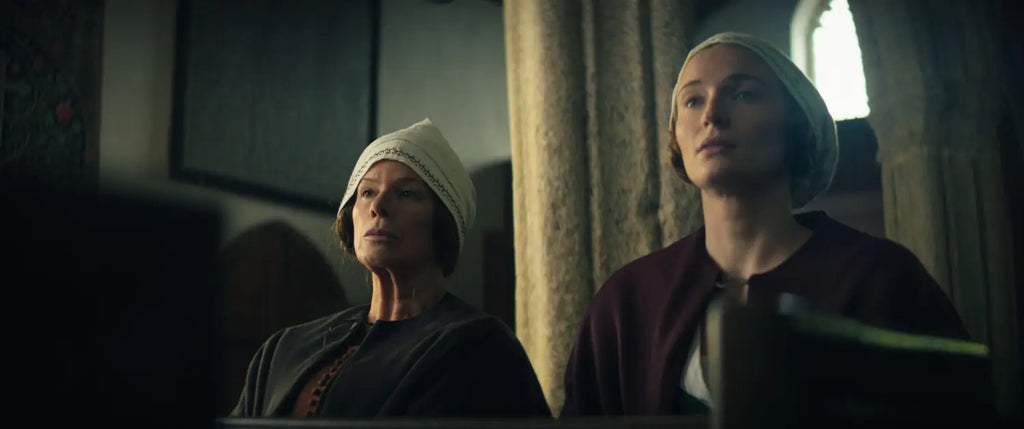
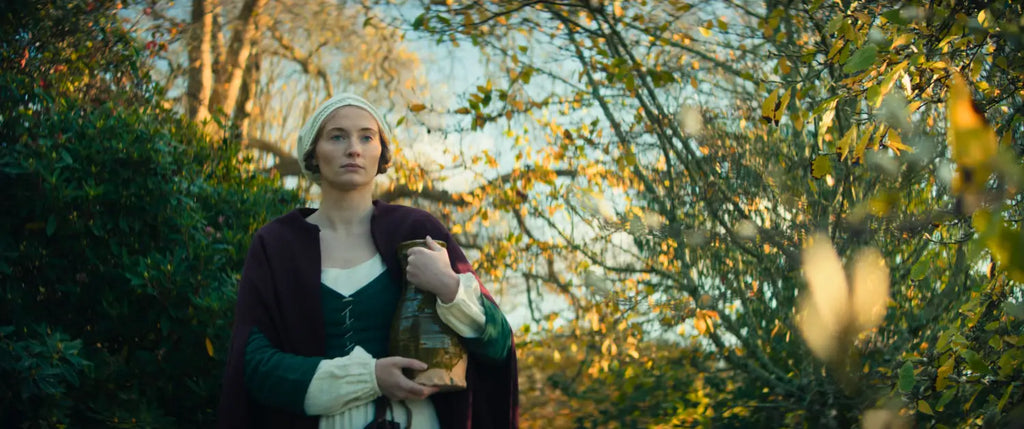
At the center of The Dreadful is Anne (Sophie Turner), a young woman living in a fragile peasant existence under the domineering eye of her mother-in-law Morwen (Marcia Gay Harden). A war rages somewhere beyond their coastal village, but its economic and spiritual decay has already seeped into their home. The women steal from those they deem better off than themselves (pregnant women included) and justify their cruelty as crude necessity. While Morwen has little if no qualms about this, Anne is far more hesitant.
The Dreadful steadily layers in flashbacks to Anne’s childhood and her marriage to Seamus (Laurence O’Fuarain), whose absence lingers like a ghost. Morwen, steeped in faith, insists he will return from war rich and triumphant. Anne attempts to cling to that hope, even as reality gnaws at it, but when her and Seamus’ childhood friend Jago (Kit Harington) arrives home alone, both her and Morwen’s fragile ecosystems collapse.
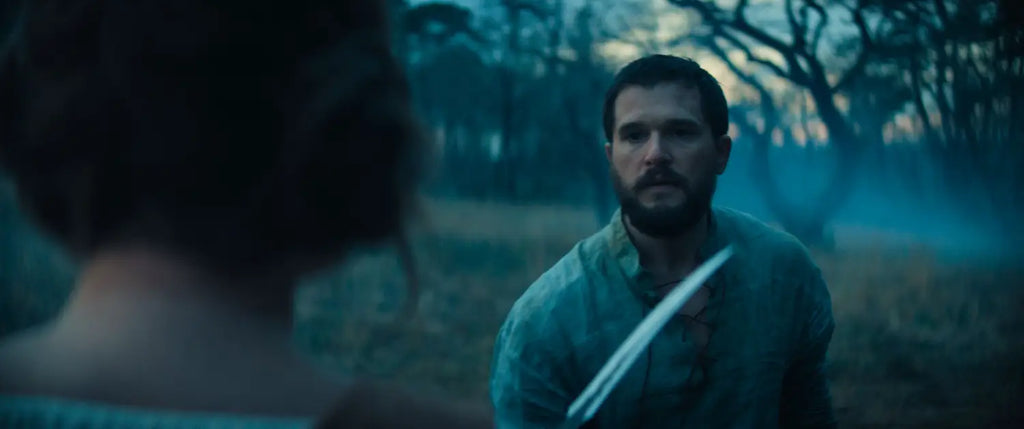
Jago claims that he and Seamus became disillusioned by the war’s atrocities and attempted to return home, only to be attacked by thieves in the night. Seamus was valiantly killed while Jago escaped. The grief that Anne and Morwen experience is immediate, but suspicion appears to seep in just as quickly.
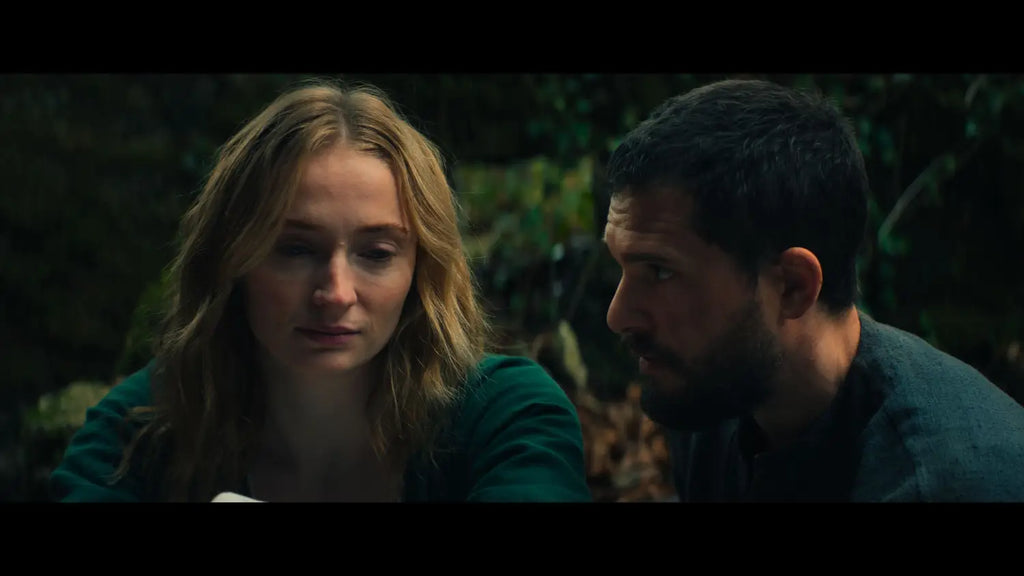
Kermani pulls from the archetypal triangle of her source material, Kaneto Shindo’s Onibaba (which in turn was inspired by a Shin Buddhist parable), and builds the film around the shifting power dynamics between Anne, Morwen, and Jago. Morwen calls Anne her “jewel,” praising her son’s choice in marriage. While it’s initially sweet, the older woman’s affections reveal themselves to feel more transactional and possessive than anything. Jago, meanwhile, hovers around Anne with the energy of what Morwen accurately describes as a “stray dog,” long resentful of living in Seamus’ shadow and now circles his widow with an unsettling eagerness. Neither one feels fully trustworthy, and that tension is what becomes the film’s engine.
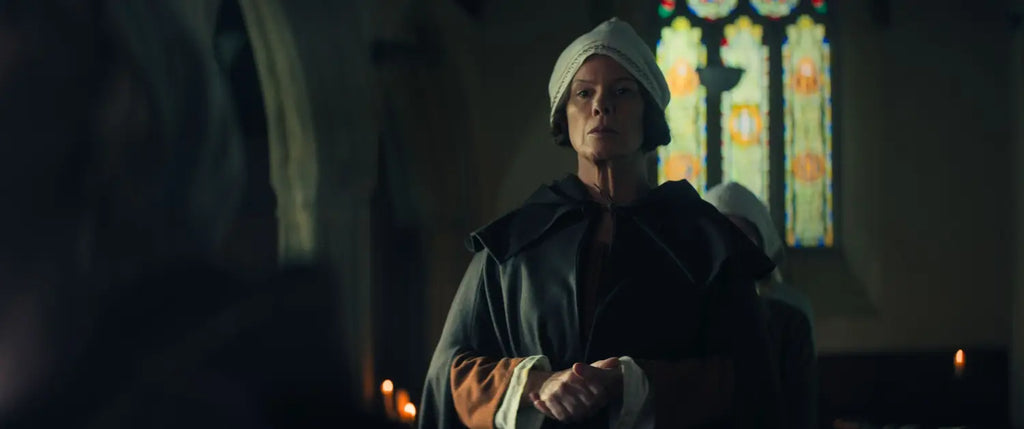
Visually, The Dreadful is consistently impressive. Cinematographer Julia Swain makes church interiors glow with candlelit severity, the filmed-on-location coastal cliffs churn with crashing waves, and the production design squeezes remarkable texture out of a modest budget. Academy-award winner Harden leans all the way into Morwen’s unique period accent and hardened pragmatism, crafting a woman whose faith and brutal survivalism exist in seamless tandem. Turner, meanwhile, carries the film’s emotional burden with quietly tortured restraint. Anne isn’t overtly fiery or reactive to the horrors that unfold around her. Instead, she’s someone who internalizes guilt and confusion until they manifest as something far more dangerous.
Anne is plagued by sightings of a knight astride a pale horse, stalking her across the shoreline and forest. Whether this knight is a literal demon or a strange manifestation of guilt, the apparition is among the film’s most compelling motifs. Jamal Green’s score, booming with lush strings and classical orchestration that swell with titular dread, does considerable heavy lifting here, elevating these sequences into something operatic.
The Dreadful isn’t content to just be a ghost story, however. It’s about survival and the stories we tell to justify it. In this world, morality feels like a luxury. “I don’t know that I can be as ruthless,” Anne admits to Morwen once their self-preservation turns violent. “I do not know if we did the right thing.” That question truly lingers, even after the credits have finished rolling.
As Anne’s guilt compounds over Morwen’s growing body count and her own eventual feelings of passion for Jago, the film shifts from dark survival thriller Iinto psychological reckoning. The push and pull over whom to trust becomes the true focus, with Jago’s version of events concerning Seamus’ death starting to fray and Morwen’s possessiveness growing to a frightening degree. Anne begins to realize that neither offers her genuine love; only greed and control in different forms.
Unfortunately, this revelation takes a bit too long to crystallize. The third act admittedly grows sluggish, and it telegraphs one particular twist well before the characters catch up, draining some tension from what should be a devastating crescendo. The pacing slackens just as the emotional stakes should be peaking. Still, Kermani manages to stick the thematic landing with real poise.
The genre filmmaker has spoken about power residing in the mythologies we construct to survive dark times. That thread runs clearly through The Dreadful. Written in the shadow of political upheaval and forged through an 18-day shoot in windy coastal England, the film feels shaped by genuine urgency and intention. It may not sustain its momentum throughout, but it is undeniably purposeful.
In the end, The Dreadful is far less about gothic horror spectacle and more about a woman clawing her way out of inherited fear. It’s a slow-burning tale of guilt, greed, and awakening, one that leaves behind a memorable trio of characters and the echoes of crashing waves.
‘The Dreadful’ comes to select theaters and digital on February 20th 2026.


