

A House of Dynamite is Kathryn Bigelow’s most unabashedly popcorn thriller to date. The story follows the POVs of multiple military and government officials responding to the immediate threat of a nuclear missile heading straight for the mainland United States, as everyone scrambles to make sense of the crisis. Yet beneath its taut, high-wire plotting lies an uneasy tension that lingers long after the credits roll. The film plays like a precision-engineered doomsday puzzle - smart, tightly wound, and eerily plausible - even when it slightly strains under the weight of its own ambition.
The opening stretch, where Captain Olivia Walker’s (Rebecca Ferguson) crisis-room team in the White House coordinate with Major Daniel Gonzalez’s (Anthony Ramos) military unit in Alaska, is the film at its most compelling. In those early minutes, the missile threat is mysterious, the pressure is real, and Bigelow’s hand feels light but surgical. We’re dropped into chaos and made to care about every beat: who’s making the call, who’s cutting corners, who’s about to crack. It hums with the kind of immersive control-room horror Bigelow has long mastered, reminiscent of her ability to make the procedural feel as immediate as combat.
There’s little spectacle for spectacle’s sake. She’s concerned with the choreography of crisis, with the hidden wires, flickering eyes, and impossible seconds ticking away. That first half hour feels like an ensemble film at its best: characters you quickly invest in, stakes you feel in your gut. Aminah Nieves’s small but haunting presence leaves a mark; her shell-shocked expressions and quiet dread linger long after the film cuts away from her. Everyone, no matter how small their role, gets a moment that matters.

If the first act is a master class in tension, the middle sections begin to strain under the structural conceit. Bigelow divides the story into three overlapping vantage points, replaying the same central eighteen-minute crisis from different perspectives. It’s an ambitious gamble that allows for thematic echo and interplay, but it can also feel like watching the same high-stakes chess match from slightly different seats. The shift toward political maneuvering and bureaucratic infighting saps some of the raw urgency that made the beginning so gripping.
Bigelow’s attention to operational realism is as sharp as ever, but here it occasionally overtakes the emotional intensity. The pacing never exactly falters, but the sense of discovery diminishes as the film turns procedural. Still, her commitment to balancing perspectives gives the movie its weight; she’s less interested in heroism than in how systems, personalities, and mistakes interact under pressure. It’s one of her more democratic works, and it thrives on collective human fallibility.
Jared Harris, playing the Secretary of Defense, is the one weak link in an otherwise airtight ensemble. The problem isn’t Harris, who brings his usual talent and nuance, but rather the way the film invests in his subplot. His arc, tied to his daughter played by Kaitlyn Dever, occupies a surprising amount of screen time without yielding a payoff really worthy of the attention. It doesn’t derail the film, but it does dilute some of its strongest material. When the focus finally shifts back to the Oval Office, Idris Elba steps in as a President who feels both commanding and faintly exhausted by the machinery of power. It’s almost funny that Elba, once again, ends up as a cinematic head of state, but he plays it with a convincing mix of grace and strain. His scenes ground the escalating chaos in something human and recognizable, even when the surrounding politics feel like heightened fantasy.

By the final act, much of the adrenaline has already burned off, but Bigelow finds a different kind of tension in uncertainty. Rather than end with catharsis, A House of Dynamite closes on an ambiguous note that leaves its audience suspended in dread. It’s a bold and fitting choice. The movie refuses to offer a neat answer or decisive outcome. We’re left wondering what’s been prevented, what mistakes have been made, and what might still be ticking. In a cinematic landscape obsessed with resolution, that kind of ambiguity feels a little brave. It’s an ending that asks us to sit with our unease instead of dispelling it, a move that feels deeply political in its own quiet way.
What carries the film through its minor stumbles is Bigelow’s uncanny ability to make technical detail cinematic. She’s done it before with The Hurt Locker and Zero Dark Thirty, translating jargon, protocols, and logistics into something nerve-shredding. Here, she once again fuses realism with momentum - the acronyms and procedures become the language of suspense. The propulsive score from Volker Bertelmann does much of the heavy lifting, giving the whole movie a pulse that never quite fades, while Kirk Baxter’s editing ensures the runtime absolutely flies by. Even in its slower middle sections, there’s an undercurrent of momentum that keeps pulling you forward.
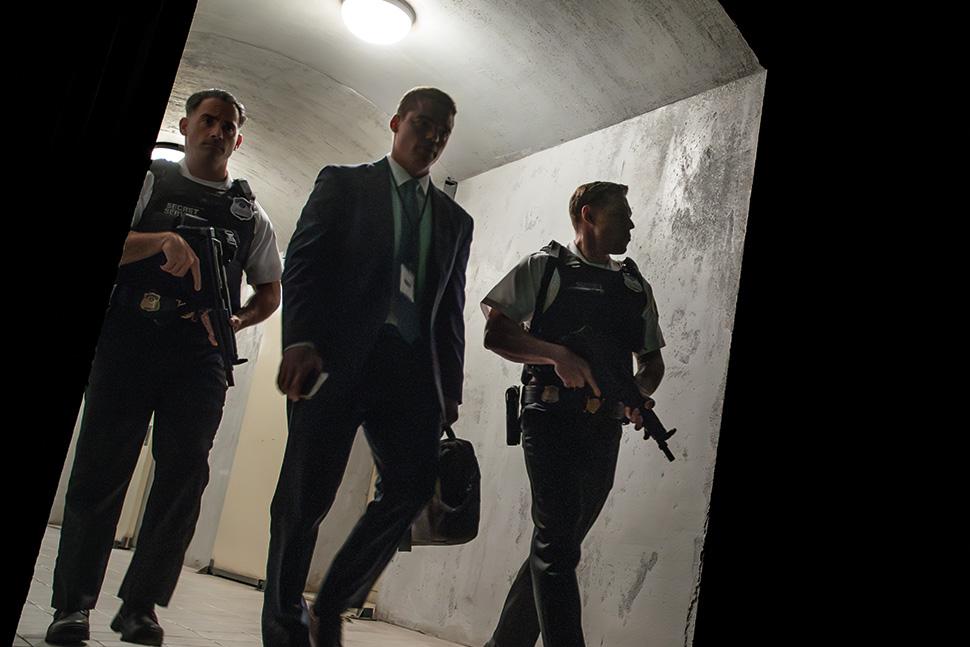
If anything, the film feels lighter than Bigelow’s earlier, more punishing work; less an autopsy of modern warfare than a tightly engineered thriller that plays to a broader crowd. It’s slick, accessible, and at times almost too easy to digest, trading the moral anguish and grit of her past films for immediacy and entertainment. But that’s also part of its achievement. It’s proof that Bigelow can craft a gripping, crowd-pleasing thriller without sacrificing her command of tension, her gift for texture, or her sharp eye for performance. There’s a technical mastery here that can’t be denied, even if it occasionally comes at the cost of emotional depth.
A House of Dynamite is a film that exists at the intersection of entertainment and anxiety. It’s a reminder of how quickly systems can falter and how close to chaos we might always be. It’s more straightforward and less deeply haunting than Bigelow’s most acclaimed work, but it’s also one of her most purely watchable. The pacing is relentless, the performances engaging, the craft impeccable. And that ending, that refusal to release us from uncertainty, ensures the movie lingers just enough to sting. It might not detonate with the force of her greatest films, but it still leaves a shockwave in its wake - a precise, polished, and unnervingly plausible thriller that proves Bigelow hasn’t lost her edge, just sharpened it for a new audience.
‘A House of Dynamite’ is now playing in select theaters and streaming on Netflix October 24th.


