

There are some movie ideas so brilliant in their simplicity that you almost can’t believe no one has done them before. Ben Leonberg’s Good Boy belongs to that rare category. A horror film told entirely from the point of view of a lovable and doting dog (of course, let's not forget to give Courage the Cowardly Dog and Scooby-Doo their due credit), it’s a premise practically primed for easy exploitation. And yet, instead of coasting on that one clever conceit, the film digs deep into style, mood, and raw emotional resonance. It’s at once a spooky haunted house tale, a heart-tugging story of loyalty, and a showcase for just how much cinematic tension can be wrung from the tilt of a dog’s head.
For anyone worried: the filmmakers have made it clear that the real animal was never in any actual danger. That reassurance is crucial, because the film obviously weaponizes the natural sympathy audiences feel for dogs. From the first shot of Indy (played by himself), an adorable golden-haired retriever dozing peacefully on the couch while his sickly owner Todd (Shane Jensen) naps beside him, we are locked into the dog’s perspective. Strange noises - static from the television, the faint buzz of a cell phone - jolt Indy awake. A dark corner of the room seems to breathe. Moments later, Todd is coughing up blood, and his sister Vera (Arielle Friedman) rushes to his aid. Indy stares back into the shadows, and the look in his eyes says everything.
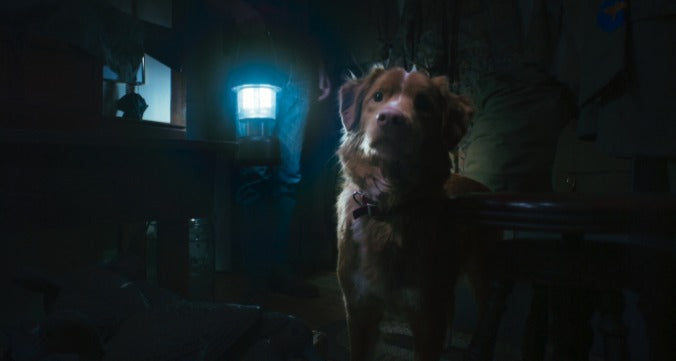
That opening, barely two minutes long, announces what Good Boy will be. It’s not just a gimmick but a full stylistic commitment. Leonberg and cinematographer Wade Grebnoel devise an array of ingenious tricks to approximate a dog’s perception: cameras swooping low to the ground, tracking shots that wander curiously down hallways or into the woods, sudden whip-pans suggesting a twitch of Indy’s ears. Faces are obscured or out of focus, keeping humans as vague presences on the periphery. We’re not in their world. We’re in Indy’s.
The plot is as spare as the 73-minute runtime. Todd, gravely ill and refusing to burden anyone, retreats with Indy to his late grandfather’s house. The storms outside rarely let up. Inside, Indy quickly senses that something else is there too, something that has perhaps been waiting. Todd tries to brush it off, telling his sister over the phone exposition like how their grandfather used to keep dogs but they all mysteriously ran away. Exposition like that is a bit on the nose, and the script can get clunky when it tries to lay out family backstory or drag in ominous graveyard chats. But the bluntness almost works when filtered through Indy’s perspective. Dogs don’t parse nuance, and so neither should we for the next hour. What we get instead are stark impressions, eerie fragments, and the unshakable pull of instinct.
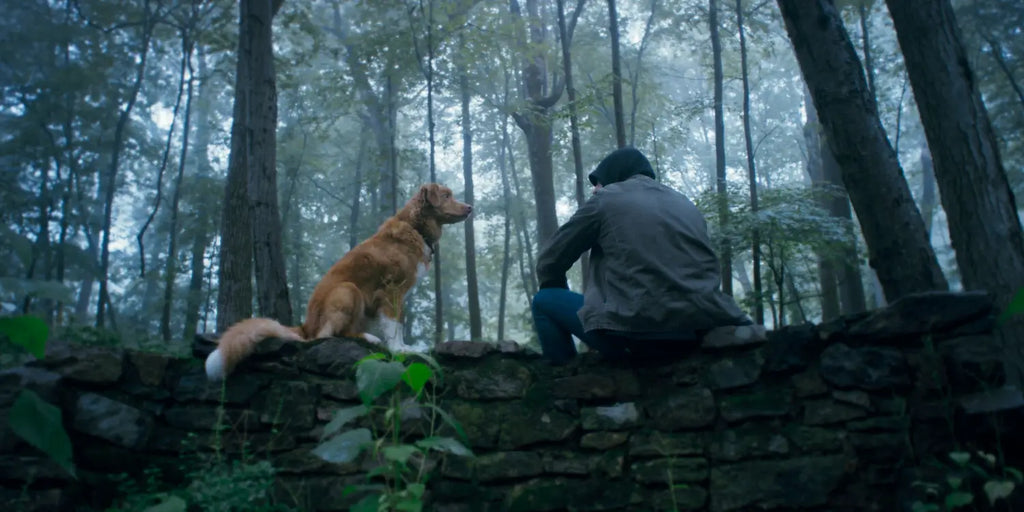
The filmmakers deserve credit for keeping the premise lean. Sequences of Indy pacing nervously by his human’s side, whimpering at sounds no one else hears, or refusing to budge from a spot until day fades into night, become riveting because of how much personality the dog projects. This is as much a triumph of animal performance as it is of editing and direction - Indy truly comes across like a natural onscreen star. His cries and whines aren’t just manipulative tricks; they are full expressions of fear, longing, and devotion.
It helps that the film looks astonishing. Nearly every frame resembles a dark oil painting, drenched in storm-cloud grays and flashes of sparse light. The use of close-ups on Indy’s eyes borders on surreal, especially when paired with dream sequences that plunge us into abstract visions of running fields and phantom animals. The score supplied by Sam Boase-Miller hums with low unease, never overwhelming the natural sounds of heavy rain and creaking floorboards. Together, it builds a mood that’s less about traditional jump scares (though there are an effective handful) and more about sustained dread and creeping sadness.
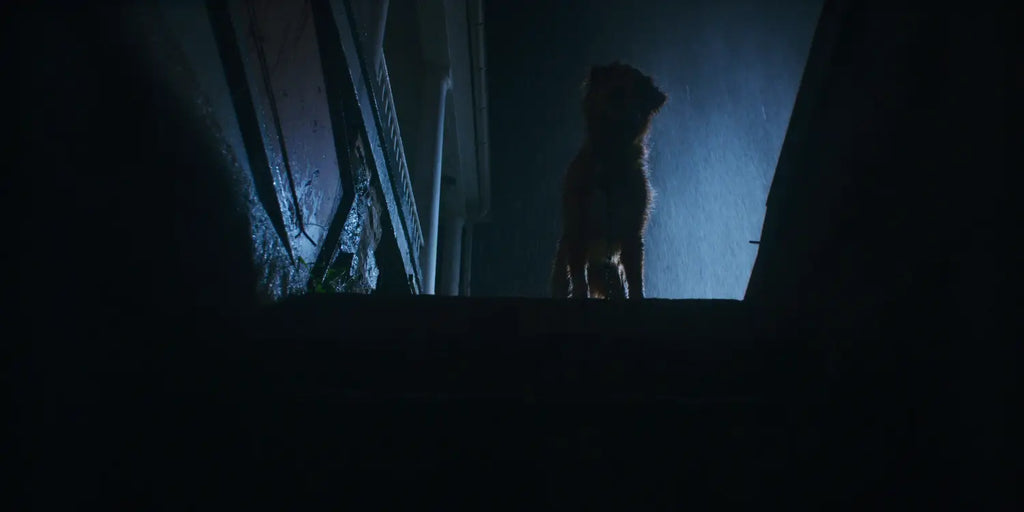
Yes, there are a few too many fake-outs. And yes, the script sometimes underlines its points when it doesn’t need to. But the film’s core emotional drive - a dog’s unwavering love for his owner - is so strong that it easily overcomes the bumps. Todd’s illness hangs heavy over the story, grounding the supernatural in real tragedy. We sense, even if Indy can’t, that the thing haunting them is less a monster than morbid inevitability itself.
By the end, Good Boy proves as heartbreaking as it is frightening. Its images of Indy, straining to protect Todd against forces far beyond his comprehension, are what linger. That helpless devotion is what makes the film cut deeper than the average haunted-house exercise. It’s scary, yes, but more than that, it’s profoundly sad. And in a genre that can too often veer into empty cruelty, there’s something genuinely moving about a horror film that takes the oldest bond - literally man’s best friend - and finds real pathos in its limits.
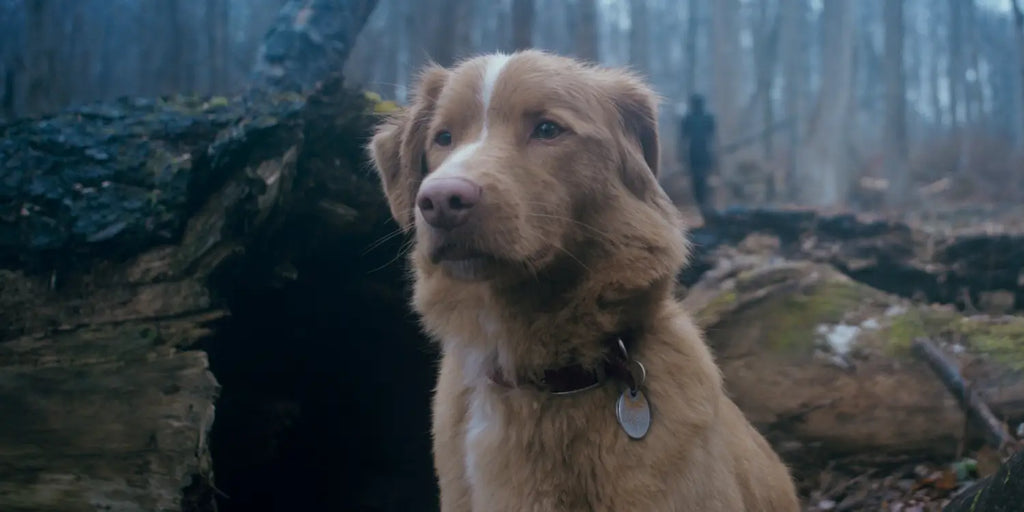
Leonberg has made a debut feature that could’ve been a cheap gimmick and instead feels like a minor miracle: experimental but accessible, stylish but emotionally direct, clever but never self-satisfied. Good Boy is a reminder that even the simplest premise can become extraordinary when filtered through the right perspective.
'Good Boy' arrives in theaters October 3rd, 2025.


