

Paul Thomas Anderson has always thrived in controlled chaos of both the broader, grander sense and the far more personal and intimate. As the American auteur behind modern classics like Boogie Nights, There Will Be Blood, Phantom Thread, The Master, and others, his films often build to an almost unbearable density of character, detail, and historical or cultural weight before bursting open in some cathartic blaze of violence, comedy, or emotion. But One Battle After Another is something else entirely, even by his own hard-to-define standards. It’s a paranoid, tragi-comic thriller that practically hums with an electric charge for nearly three hours, a rush that leaves you stumbling out of the theater like you’ve just taken in three lungs’ worth of secondhand revolutionary fumes. It’s dizzying and exhilarating, elliptical and outrageous, and still unmistakably PTA.
The movie opens on a migrant detention facility - immediately provocative, immediately unsettling. A small revolutionary cell known as the French 75 storms the place, freeing detainees in a sequence that’s scored like a rollercoaster lift hill by Jonny Greenwood’s piano-driven soundtrack. Both the score and the film rarely let up from there. Perfidia Beverly Hills (Teyana Taylor), the fiery leader, orchestrates the raids with both conviction and an almost unnerving magnetism. Her right-hand man is Pat, (Leonardo DiCaprio, loose and funny in a fresh, paranoia-driven performance), who supplies explosives for the crew while trying to keep one foot in a semblance of family life. Their relationship is volatile, romantic, absurdly sexy, and, like much else here, doomed from the start.
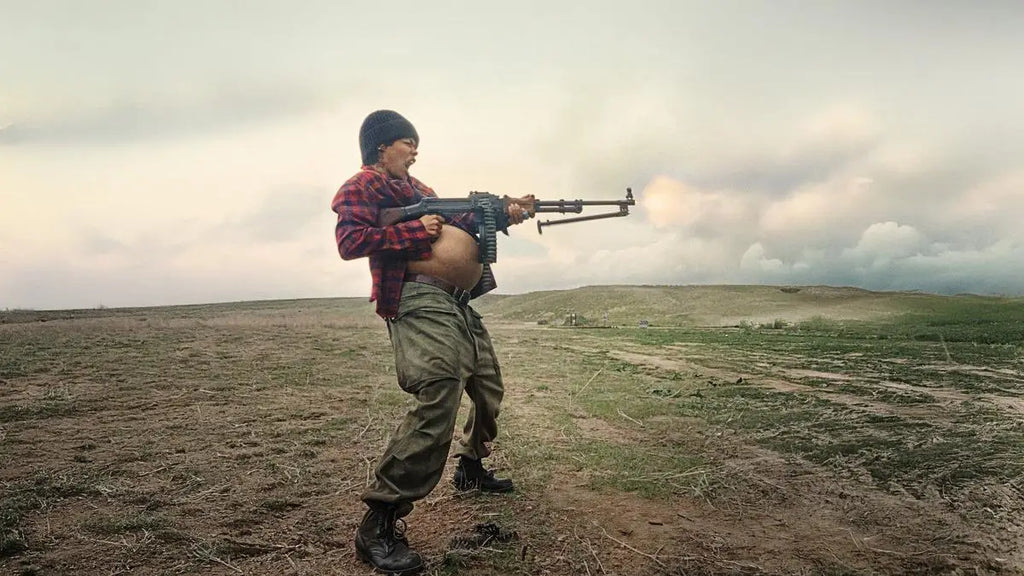
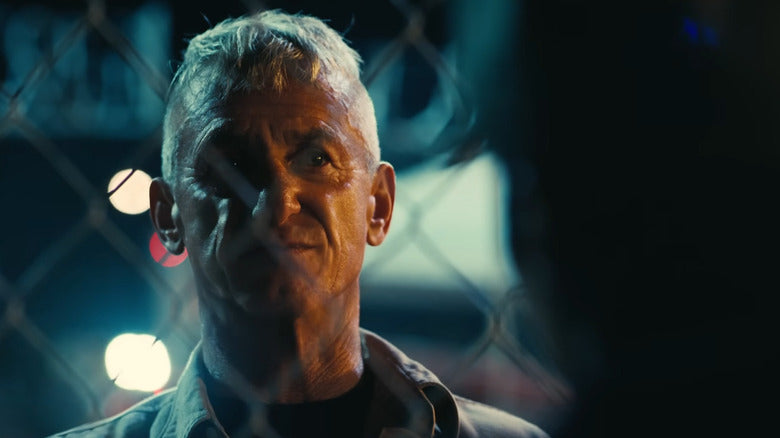
Of course, nothing runs smoothly. After years of revolutionary acts and the birth of their daughter, one job goes spectacularly wrong, Perfidia gets captured, and her choices in the fallout shift the entire trajectory of the story. What begins as an uncomfortably sexually charged war between Perfidia and the white supremacist fascist Captain Lockjaw (a vile, perversely funny performance from Sean Penn that PTA frames as somewhere between Frollo and Wile E. Coyote with military might) fractures into something more personal, more generational. Pat and his daughter, Charlene, slip into hiding, taking on new identities as Bob and Willa. Perfidia disappears into an uncertain haze. Sixteen years pass, and the revolution hasn’t burned out, just smoldered under new disguises and in new generations.
What’s remarkable is how deftly Anderson ties the personal to the political without ever flattening one into the other. He’s less interested in didactic speechifying than he is in lived contradiction. Willa (now a teenager, played with sharp comic timing, sincerity, and exceptional strength by newcomer Chase Infiniti) is pulled into the same cycle her parents once spun through, whether she wants to be or not. Bob bumbles along as the paranoid, stoner dad trying desperately to shield her from it all, and failing because there is no shielding anyone. Lockjaw, still in power after climbing through the ranks of inhumanity, remains a grotesque, lusty embodiment of the state’s cruelty - his psychosexual fixation on Perfidia (even years after her disappearance) giving him a twisted, personal drive to keep hunting down her old comrades.
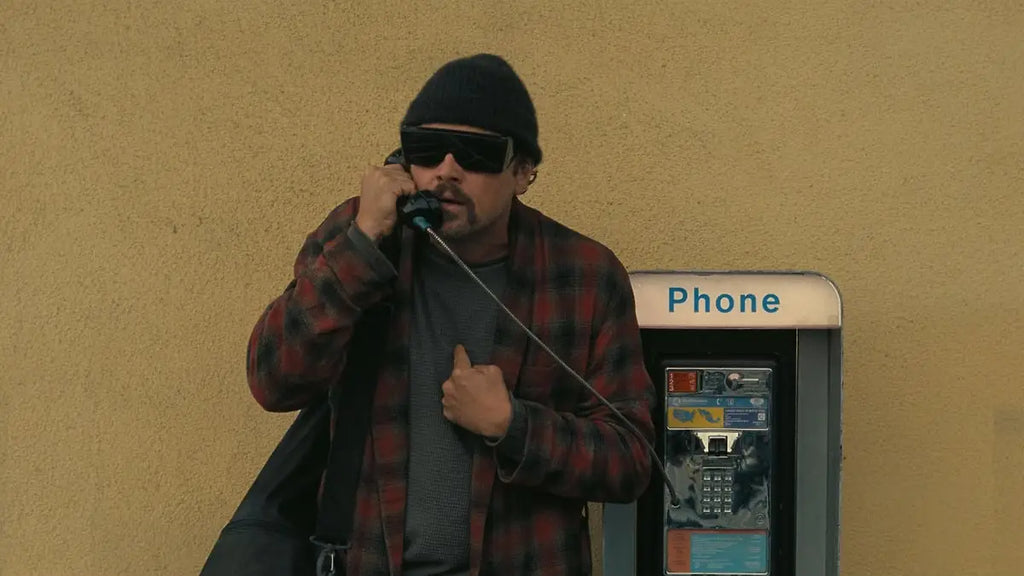
The satire here is pointed but not detached. Anderson makes the fascists’ ideology explicit - white Christian supremacists dreaming of racial “purity” - and then coats it in absurdism, humiliation, and slapstick without ever softening the horror. The Christmas Adventurers Club, the ludicrous name of Lockjaw’s secret cabal, would be laughable if not for how closely it mirrors real-world fanaticism. And that’s the point: One Battle After Another insists that the ugliest ideologies are rarely hidden in shadows. They’re loud, ridiculous, and all too dangerous all the same.
The comparisons to Thomas Pynchon’s Vineland, which PTA has based this film on, are obviously well-earned, but this isn’t satire in the tidy sense. It’s post-ironic, exhausting, and bitterly funny, like staring too long at a cartoon villain until you realize he’s pointing an AR-15 at you and your loved ones. Anderson stages raids on sanctuary cities, poultry plants, and homes with both bleak realism and exciting cinematic energy. Soldiers in full camo storm a school dance in one moment; in another, Bob forgets the underground resistance’s passcodes and turns a tense exchange into farce. The balance of levity and despair is disorienting, and deliberately so.
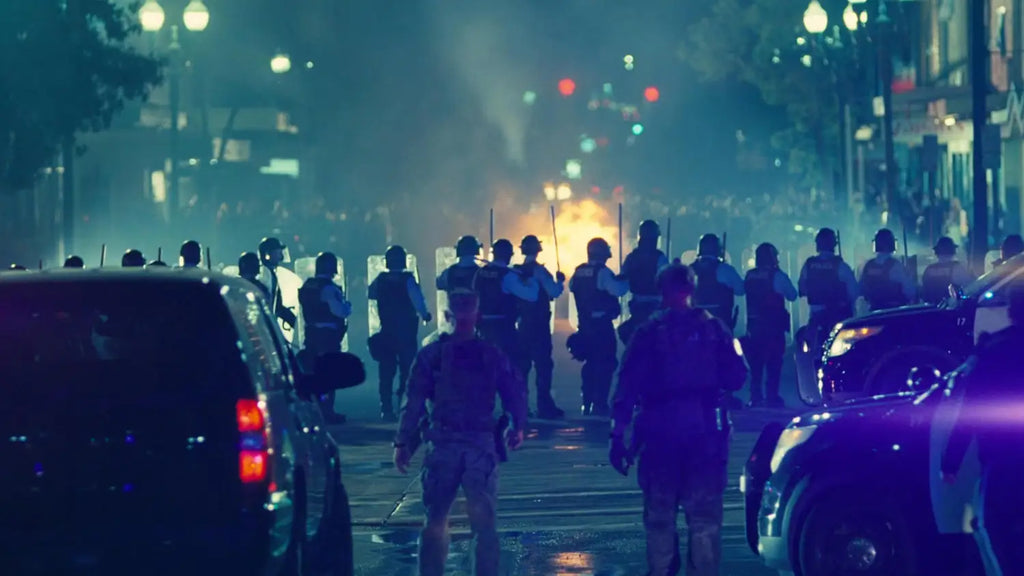
What gives the movie its staying power is how it threads those big, terrifying images back through the intimacy of family and love. At its core, this is a film about parenthood - about what it means to pass on values, to hold onto your ideals as you age, to wonder whether you did enough while you still had the energy to fight. It’s less a lament for lost radical roots than a bittersweet acknowledgment that they evolve, they’re carried on, and they survive in new forms. The revolution doesn’t die; it changes hands.
That’s where the film’s surprising sweetness comes in. For all its darkness and paranoia, One Battle After Another is hopeful. It never excuses inaction - Anderson is too sharp to suggest that simply leaving things to the next generation is enough - but it insists that genuine love, expression and humanity carry something the fascists never will. Their power and artillery amount to nothing compared to genuine life. That’s why the film’s climax, a literal uphill and downhill chase across a winding endless road, feels so thematically perfect: revolution and survival are a series of rises and falls, breaths and gasps, never-ending but always moving.
Anderson, cinematographer Michael Bauman, and editor Andy Jurgensen (amongst the countless others it takes to make a movie happen) turn nearly three hours into something that feels half the length in a testament to the propulsiveness of the film’s momentum. The needle drops are inspired, ranging from Steely Dan to Los Panchos to Beyoncé. Every scene has its own pulse, its own rhythm. Even the quieter moments between Bob and Willa crackle with humor and energy, grounding the grander spectacle in something deeply human.
There will be endless thinkpieces about how this fits into Anderson’s career, about its place among the recent wave of topical "radical" American cinema - Ari Aster’s Eddington, Martin Scorsese’s Killers of the Flower Moon, Daniel Goldhauber’s How to Blow Up a Pipeline, and so on. But what matters most is the experience of watching it unfold in real time. This isn’t just a film that wants you to think; it’s a film that wants you to feel like you’re tumbling through history, hanging on by your fingernails.
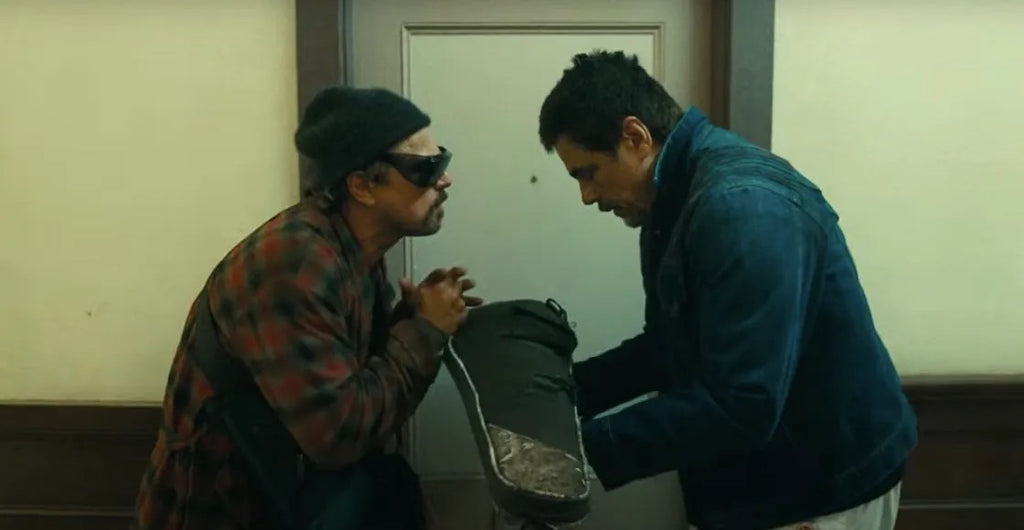
One Battle After Another is, without question, one of the best movies of the year. It’s thrilling, terrifying, hilarious, devastating, and essential all at once. Few filmmakers could pull that off, but Paul Thomas Anderson, in his own strange and uncompromising way, makes it look effortless once again. Do not miss this one on the big screen.
'One Battle After Another' is now playing in theaters.


