

Few moviegoing experiences have ever matched the sheer awe and cinematic wizardry of Steven Spielberg’s Jurassic Park. Released in 1993, it was a thunderous evolution in blockbuster filmmaking - a marriage of bleeding-edge visual effects and Spielbergian wonder that hasn’t lost a shred of its power even over thirty years later. Everyone knows this movie. Its T. Rex roar didn’t just echo through the theater - it shook the entire industry. Since then, the franchise has grown into a sprawling saga of sequels, reboots, and reimaginings that have varied wildly in quality, tone, and intent. But regardless of where you fall on which entries are worthwhile and which are disposable, the cultural impact of these films - those dinosaurs, that John Williams score, that logo - is undeniable.
As Jurassic World Rebirth attempts to right the ship and reframe the story for a new era, it’s the perfect time to look back at the highs and lows of the franchise. This is a series that’s been messy, thrilling, dumb, bold, half-baked, awe-inspiring, cynical, sincere, and everything in between. At their best, these movies tap into something primal - our endless fascination with Earth’s ancient giants. At their worst, they trample on the magic that made the original so unforgettable. Here's how they stack up.
Jurassic World Dominion (2022)

By the time Dominion arrives, the dinosaurs aren’t the only thing on the brink of extinction. Coherence, character arcs, and any sense of stakes are all buried beneath a bloated, confused attempt to merge legacy characters with the new generation. The promise at the end of Fallen Kingdom - a world where humans and dinosaurs coexist in beautiful chaos - is almost entirely ignored in favor of genetically modified locusts and dull corporate espionage. Even when Alan Grant, Ellie Sattler, and Ian Malcolm return, it feels more like a contractual obligation than a triumphant reunion. The film juggles far too many characters, plotlines, and tones, all without ever delivering the true sense of wonder or dread that defines the franchise at its best. Not even a solid Michael Giacchino score or a few solid creature sequences can save this from feeling like a hollow imitation of everything that came before. When a Jurassic movie forgets that the dinosaurs are the stars, it’s doomed from the start. Check out our full review of Dominion - HERE
Jurassic World: Fallen Kingdom (2018)
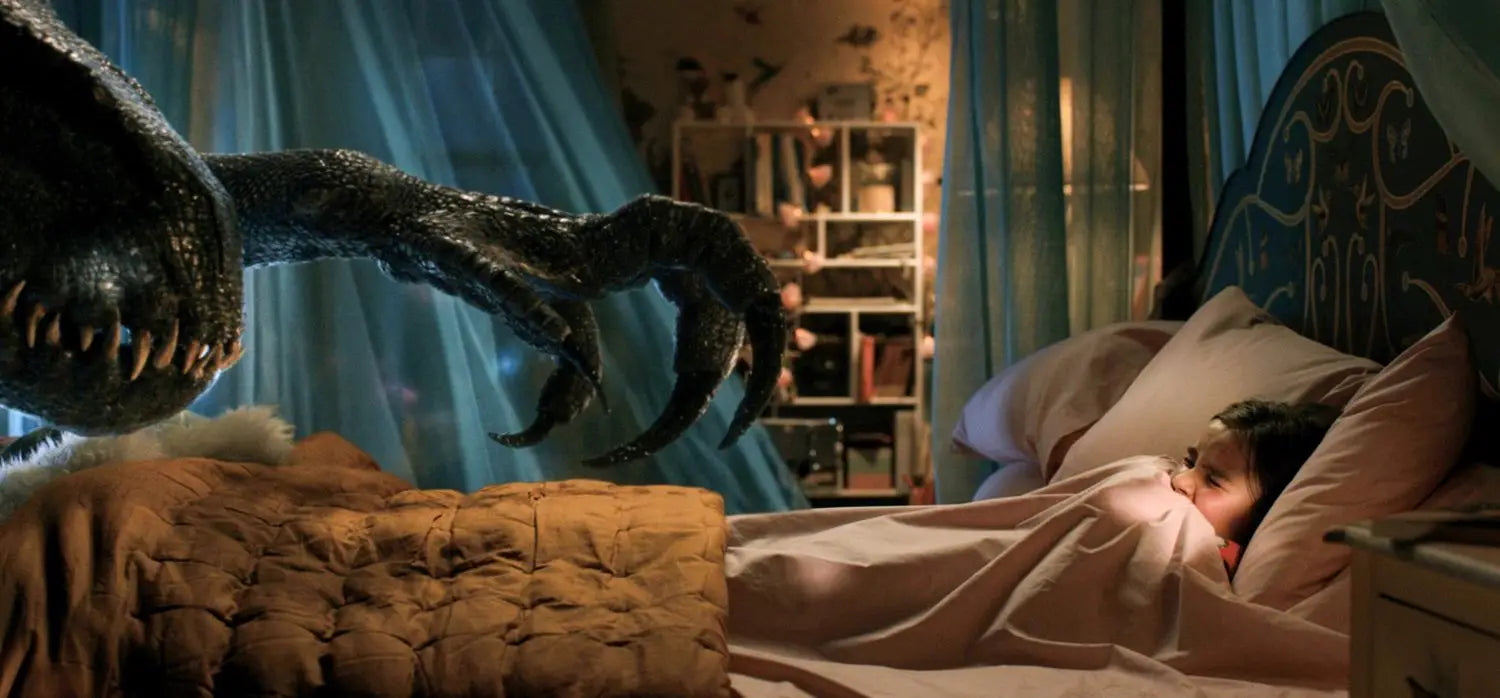
There’s something admirably weird about Fallen Kingdom. It’s the most stylistically bold of the World trilogy, with J.A. Bayona giving the second half a horror-inflected vibe as dinosaurs stalk the halls of a shadowy mansion. It’s also the most thematically confused and narratively absurd, introducing a human clone subplot that feels yanked out of a soap opera. Yet despite its head-scratching choices, Fallen Kingdom at least tries to shake things up. The destruction of Isla Nublar is a legitimately affecting sequence, and there are flashes of visual grandeur and emotional weight that hint at a more focused, thrilling film. Unfortunately, those moments are drowned in exposition, poorly sketched villains, and the franchise’s growing obsession with poorly realized weaponized dinosaurs. It’s a mess, but a fascinating one - more daring than the first World or Dominion, but just as directionless.
Jurassic World (2015)
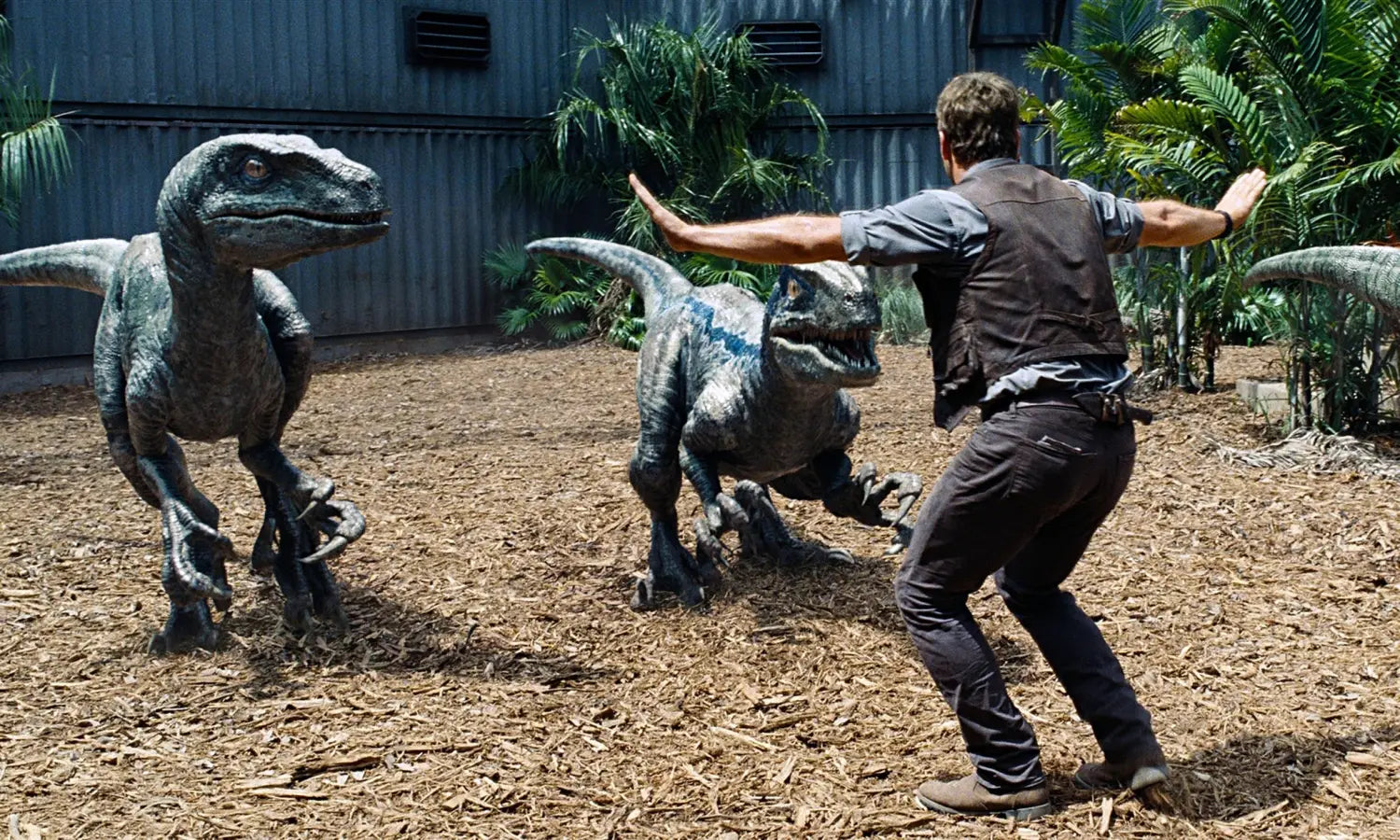
A sleek, crowd-pleasing remix of Jurassic Park’s greatest hits, Colin Trevorrow’s Jurassic World revives the franchise by doubling down on nostalgia and scale. The premise - a fully operational dinosaur theme park that predictably goes haywire - is a smart way to reintroduce audiences to this world, and there’s some genuine fun to be had watching things fall apart in spectacular fashion. Chris Pratt and Bryce Dallas Howard do what they can with thin characters, and the Indominus Rex makes for a decent monster-of-the-week. But beneath the shiny surface is a film that doesn’t have much new to say. It’s often cynical in its fan service, and its messaging about consumerism and genetic tampering feels half-hearted. Still, as a reboot, it mostly delivers on the basic thrills. The raptor squad, the Mosasaurus reveal, the final dino showdown - it’s big, dumb, crowd-pleasing fun.
Jurassic World Rebirth (2025)

Rather than continuing to escalate the franchise’s absurdity, Rebirth scales things back, returning to something more character-driven and environmentally conscious. There's an eerie stillness to many of the film’s best sequences, with new director Gareth Edwards embracing naturalistic lighting, a slower pace, and the terrifying majesty of the dinosaurs. Set in the aftermath of humanity’s failed attempt to coexist with these creatures, it has real teeth - not just spectacle for spectacle’s sake, but a genuine effort to recapture the wonder of the original. The cast is leaner, the plot is tighter, and the dinosaurs finally feel like animals again rather than video game bosses. Rebirth obviously can’t match the magic of the original, but it earns its place in the franchise by being the most thoughtful and visually confident entry in decades. It’s a course correction that reminds you why this series mattered in the first place. Check out our full review of Rebirth - HERE
Jurassic Park III (2001)
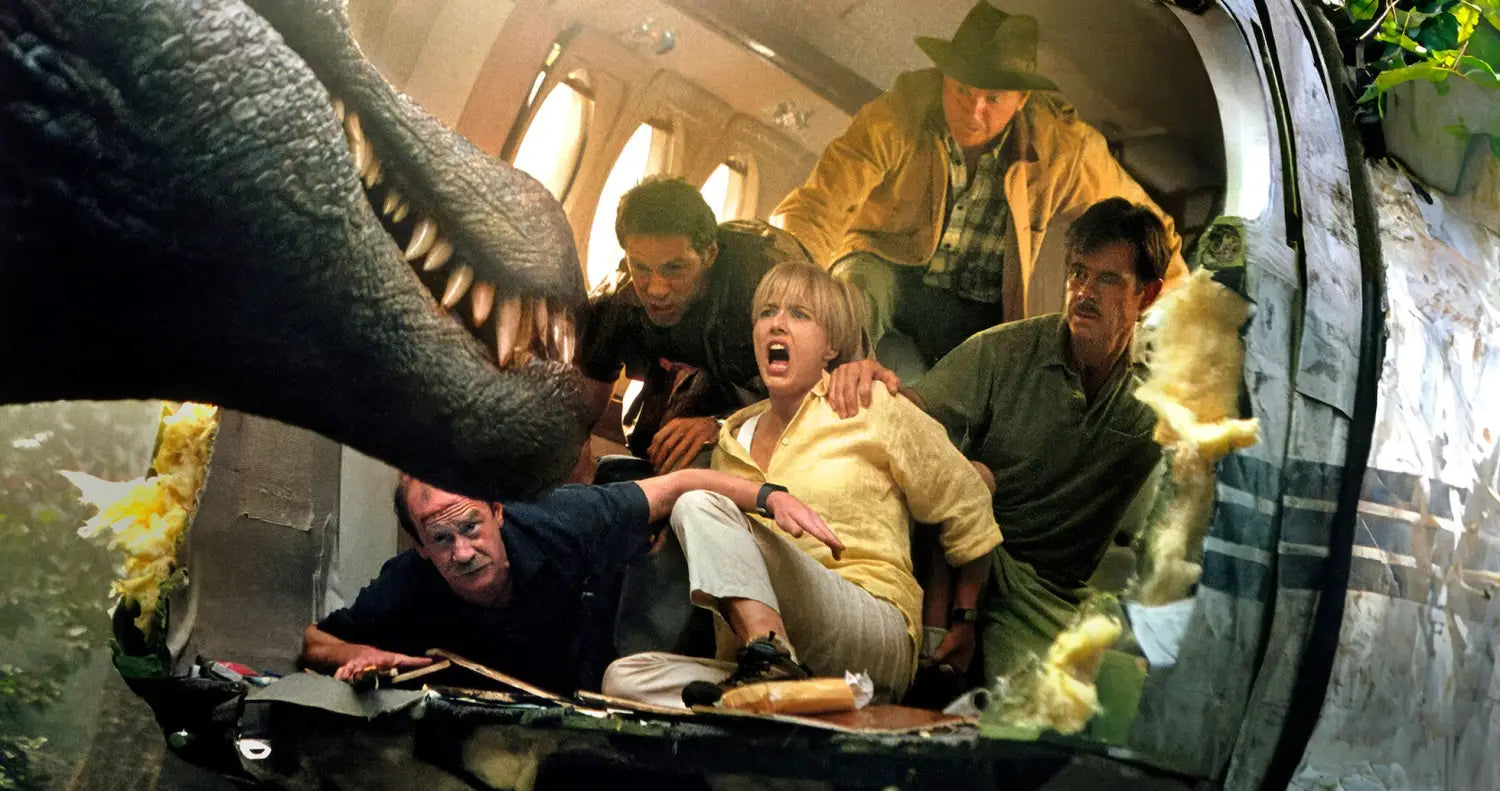
Jurassic Park III doesn’t try to be anything more than a brisk survival thriller, and in that regard, it succeeds. Clocking in at a tight 92 minutes, it’s the leanest and meanest of the sequels, with some effective action sequences and a delightfully annoyed Sam Neill. It also gives us the Spinosaurus, a controversial addition to the dino roster who at least brings something new and exciting to the table. Sure, the plot is flimsy and the characters mostly forgettable (though Téa Leoni's constant yelling is…memorable), but there’s a real B-movie energy to the whole thing that works in its favor. Joe Johnston’s direction isn’t flashy, but it’s focused, and there are moments - like the aviary attack and satellite phone stomach reveal - that have become weirdly iconic in their own right. It’s not prestige Jurassic, but it’s honest about what it is: a Saturday matinee romp with teeth. I wore this VHS out at my house.
The Lost World: Jurassic Park (1997)
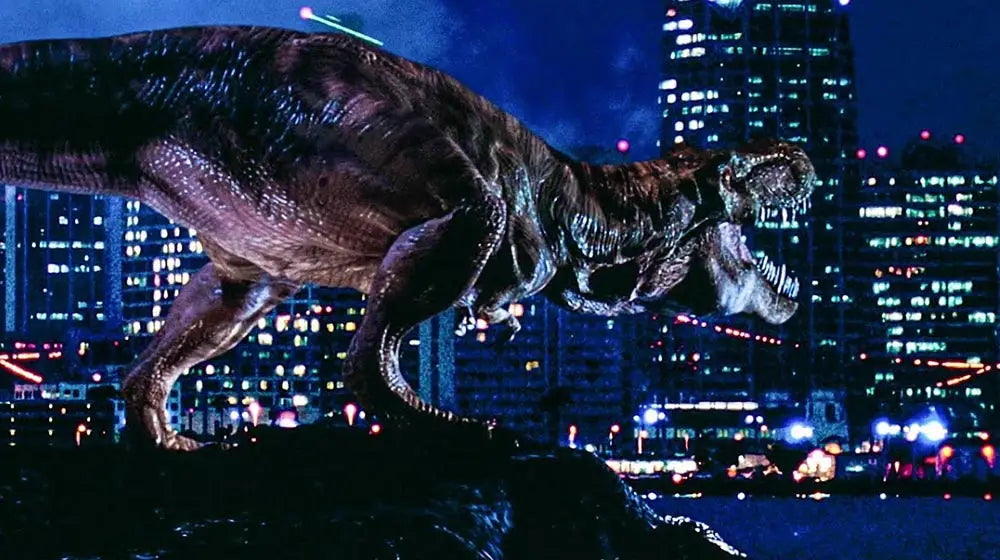
The Lost World is one of the most divisive of all Jurassic movies, but there’s a raw, brutal energy to it that remains uniquely compelling. Spielberg trades the wonder of the original for a grimmer, more action-heavy approach. Jeff Goldblum’s Ian Malcolm takes center stage this time, and while the supporting cast is a mixed bag despite strong actors, Pete Postlethwaite's big-game hunter is the only one to steal every scene he’s in. The movie’s middle stretch - particularly the trailer hanging off the cliff during the dual dino attack - is pure Spielberg set-piece mastery. And while the San Diego climax is often criticized, it’s still a hell of a visual gag: King Kong in reverse. The film’s flaws are evident - clunky pacing, some dodgy effects, and a subplot or two that goes nowhere - but there’s something feral and unpolished about it that makes it stand out. It’s Spielberg experimenting, and that’s always interesting, even when it doesn’t fully click.
Jurassic Park (1993)

There’s a reason no sequel has ever topped Jurassic Park. It’s not just the groundbreaking special effects - though they remain astonishing - it’s the way Spielberg balances spectacle with character, terror with awe. Every shot feels meticulously crafted, every set piece a masterclass in suspense. But beyond the thrills, Jurassic Park is deeply thoughtful about science, hubris, and chaos. It’s a film that respects its audience’s intelligence while delivering popcorn entertainment of the highest order. The performances (Goldblum, Neill, Dern, and Attenborough all at their best), the instantly iconic John Williams score, the clean and efficient script from David Koepp and Michael Crichton - it all just works. Even decades later, the image of a rippling water cup is enough to send chills. Like the creatures it resurrects, Jurassic Park is a marvel of design and ambition. Unlike them, it’s timeless.


