

Few horror films have left as indelible a mark as 28 Days Later. Danny Boyle and Alex Garland’s 2002 modern apocalypse didn’t just help resurrect the zombie genre - it completely rewired it. The frenzied pace of its infected, the lo-fi immediacy of its digital cinematography, and the raw performances that turned its monsters into more than just background carnage all combined to birth something entirely new. Over the years, countless films and television and other media have chased that same high. Now, more than two decades later, 28 Years Later finally arrives as a true continuation - not just in name, but in spirit, in scale, and in sheer audacity.
Reuniting Boyle and Garland, with original cinematographer Anthony Dod Mantle also returning, 28 Years Later feels both like a homecoming and a rebirth. The first installment was scrappy and intimate, defined by its grainy visuals and near-documentary realism. This new chapter is something far larger, more polished, and more ambitious. Yet the DNA is unmistakably intact: the jittery, chaotic editing; the overwhelming sense of dread; the apocalyptic absurdity that always feels one misstep away from reality. It’s not just a return - it’s an escalation.
The story picks up decades after the Rage virus first decimated Britain. While the rest of the world has since moved on, the British mainland has been left isolated, fenced off, and written out of history. The infected may have changed, but the horror remains. Where 28 Years Later finds new ground is in its generational perspective. We meet Spike (Alfie Williams), a teenage boy raised on a peaceful survivor island with his ailing mother Isla (Jodie Comer) and hardened, closed-off father Jamie (Aaron-Taylor Johnson). Spike is venturing out for his first hunt on the mainland, a manly rite of passage steeped in violence. What was once an emergency act of survival is now routine - a culture formed around killing.
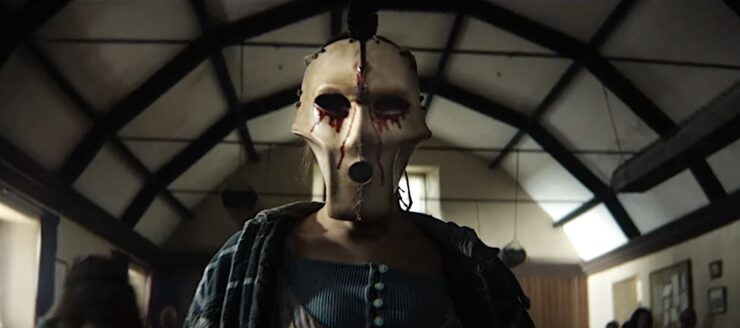
Spike’s world is one without phones, internet, or any real knowledge of the world before. The idea of a mainland civilization feels more like myth than memory. And yet, he’s thrust into it headfirst when he makes the rash decision to take his sick mother into the forbidden zone in search of a reclusive doctor who might be able to help. That doctor, played with eccentric, magnetic weight by Ralph Fiennes, becomes the story’s most potent symbol of the film’s thematic core: death, memory, and what it means to preserve either.
Thematically, this film is rich. While still a terrifying, bloody ride, 28 Years Later is preoccupied with deeper questions - how do we pass on trauma? How do we normalize killing? What does it mean to survive, and at what cost? The movie paints this all across beautifully vast landscapes and stunning sequences, never losing its propulsive energy but always injecting meaning beneath the madness.
There’s an evolution to the infected here as well. The film introduces alphas - larger, more intelligent infected who command the seemingly mindless hordes beneath them. It’s a risky idea on paper, but Boyle and Garland make it work, leaning into primal fear and keeping the focus on chaos. These aren’t zombies. They’re still people, their humanity visible beneath the rage, and that remains what’s so chilling about this universe. The editing delivered by Jon Harris is breathtaking - disorienting in the best way, intercutting various other media as the film's characters traverse the landscape, and capturing that “hell no” intensity during action sequences that made the original such a nerve-shredder. A remarkable, nail-biting chase lit by the aurora borealis is among the most stunning horror set pieces in recent memory.
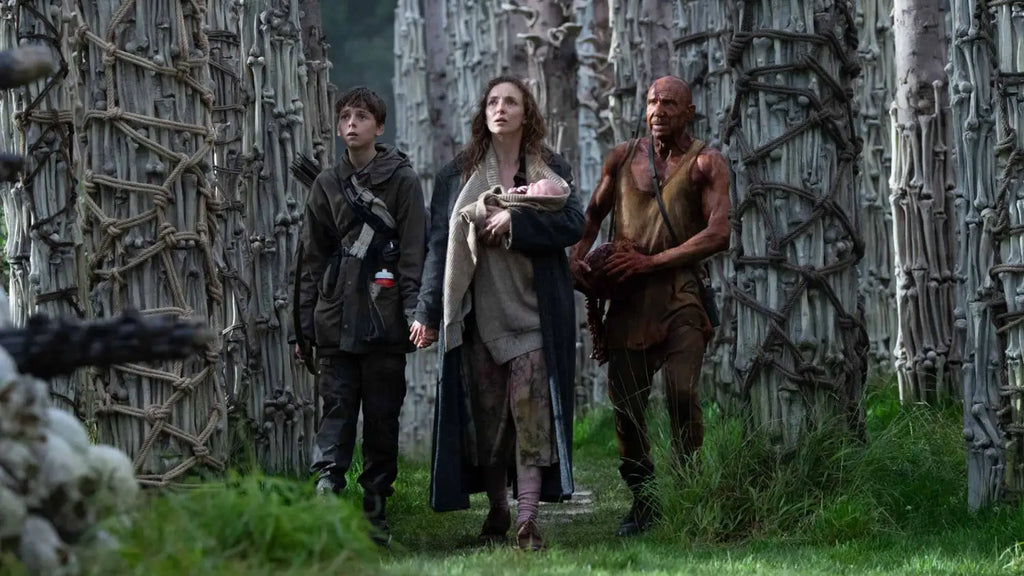
The style throughout is immaculate. Boyle pulls from his entire visual arsenal - freeze frames, camera spins, deep color palettes, shocking cuts - and Dod Mantle’s cinematography soaks the screen in an uneasy beauty. The soundtrack is packed with needle drops that should not work but absolutely do, crashing into scenes of visceral horror and turning them into grotesque music videos. It’s maximalist filmmaking that earns it every step of the way.
There’s also a surprising amount of humor, thanks largely to a delightful supporting turn from a Swedish soldier named Erik (Edvin Ryding), who represents the modern world outside of Britain. He’s charming, grounded, and jarringly normal, with a smartphone and access to the internet, contrasting hilariously and poignantly with Spike’s post-technological upbringing. Erik’s presence is short-lived, but his energy and perspective help anchor the film's middle stretch and deepen the emotional stakes.
If 28 Years Later has a fault, it’s that it bites off just a bit more than it can chew. The final act shifts gears hard, stepping away from relentless terror and toward something far more meditative. The film slows down, gets contemplative, even elegiac. Most of it works, especially in how it contrasts the celebration of death with the struggle to preserve life (including a jaw-dropping birth sequence that hits like a brick). But some of it feels unresolved or deliberately withheld. There are major unanswered questions, and the film ends on a tonal cliffhanger that may frustrate more than it intrigues. The seams of the planned trilogy structure begin to show.
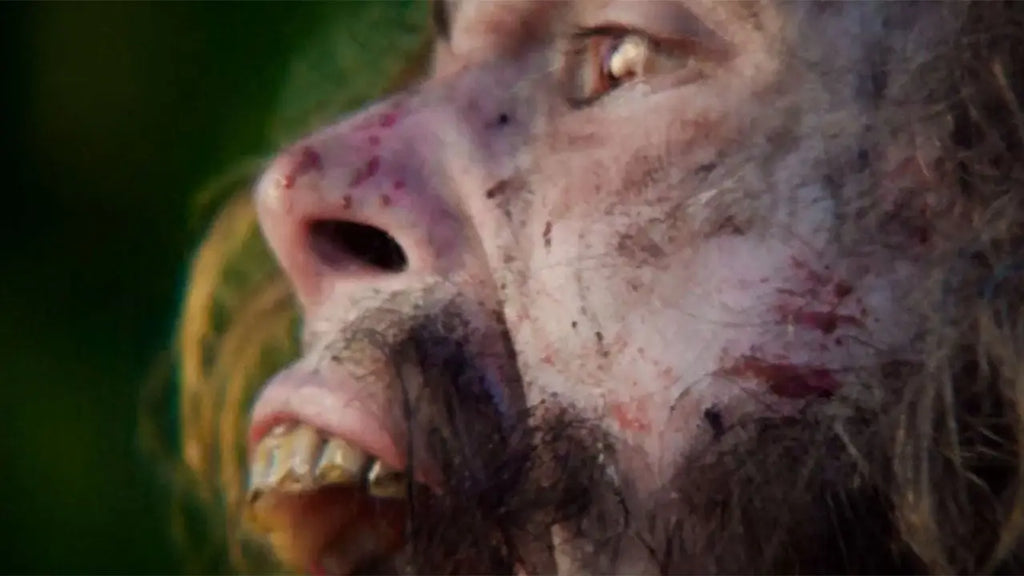
Still, even with an ending that doesn’t entirely land, 28 Years Later remains a triumphant return. It remembers what made the original so great - not just the gore or the infected, but the weight of its apocalypse, the urgency in its storytelling, and the devastation that lingers long after the blood has dried. Boyle and Garland swing big here, and while not everything connects, the things that do are nothing short of phenomenal.
This is what franchise filmmaking should be: visionary, personal, and unafraid to get weird. In an age where most zombie stories feel like retreads, 28 Years Later dares to evolve. When it’s good, it’s not just good - it’s one of the best things you’ll see all year.
'28 Years Later' is now playing in theaters.


