

Park Chan-wook has never been a filmmaker who wastes a frame, but No Other Choice feels like the culmination of everything he’s mastered across his career. Which is certainly saying something, considering the Korean director has incomparable works like Oldboy, The Handmaiden, and Decision to Leave (among others) under his belt. It’s a film so precise, so layered, and so entrancing in its construction that you almost sit there stunned, scene after scene, at how effortlessly he makes virtuosity look. This is Park operating at the height of his powers, delivering a thriller that’s as unpredictable as it is darkly funny, as emotionally bruising as it is formally immaculate. And yet, despite all that elegance and craft, No Other Choice hits with the accessibility of a broad crowd-pleaser - just one operating at a level most box-office-minded crowd-pleasers could never dream of.
At the center of its spiraling moral catastrophe is Man-su, played with desperate and hilarious clarity by Lee Byung-hun (Squid Game, KPop Demon Hunters). He’s not an extraordinary man. He’s not even a particularly ambitious one. He’s someone who wants what so many people want: stability, comfort, and a dependable livelihood to keep it all afloat. When we meet him, he’s a respected manager at the papermaking company he works for, friendly with his coworkers, able to provide for his beautiful wife Mi-ri (Son Ye-jin), two kids, their golden retrievers, and clinging (without fully realizing it) to an increasingly endangered rung of the middle class. There’s something instantly recognizable about him, especially in this economic climate: a man doing everything “right,” only to discover that none of it matters.
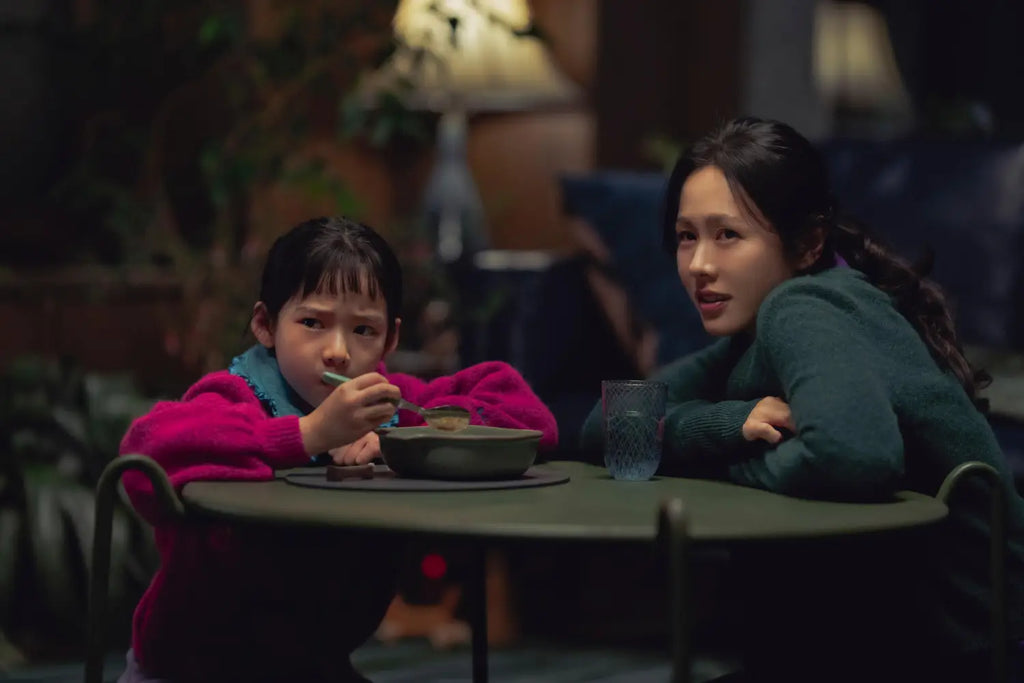
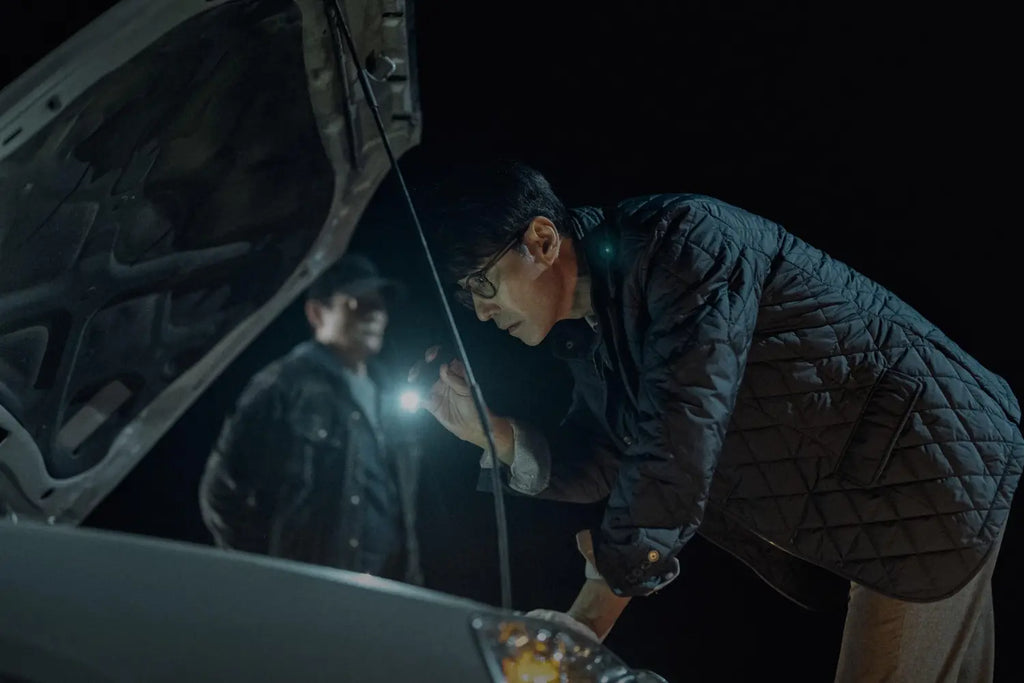
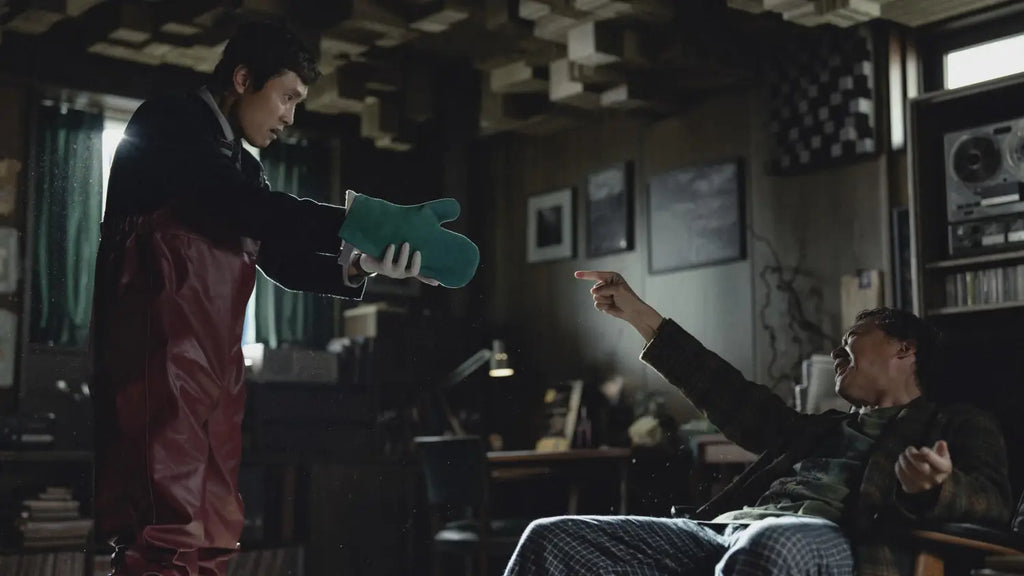
What follows could’ve been played as bleak tragedy, but Park (who based the film on the novel The Ax by Donald Westlake) mutates the story into something more mercurial, unpredictable, and tonally wild. Man-su is unceremoniously laid off from his company once they’re bought out and forced into automation, and when his severance quickly runs out, desperate times call for desperate measures. Unwilling to give up the modern day conveniences and creature comforts of the life he worked decades for, Man-su hatches a somewhat demented plan. He’s found the new job that will get him back on top, but in order to eliminate the competition for it, he will…well, literally eliminate them. Or at least attempt to, in a series of escalating errors that show what happens when a very much non-professional killer attempts to become one in order to not have to cancel his family’s Netflix account.
No Other Choice ricochets constantly, but never sloppily, between humor, crime, suspense, and devastating drama. It’s frequently hilarious, often in ways that underline just how absurd the cruelty of the modern world has become. It’s also nail-bitingly tense, delivering stretches of pure thriller filmmaking that feel almost old-school in their kinetic craftsmanship and control. And then, without losing momentum, without missing a beat, the film will undercut everything with a moment of profound emotional heaviness. That kind of tonal range would tank a lesser movie; here, it works in perfect conjunction with the film’s ideas about instability, desperation, and the slow corrosion of humanity under capitalism.
Park’s editing, done alongside longtime collaborator Kim Sang-bum as well as Kim Ho-bin, is one of the film’s greatest feats. Images bleed into one another, sounds ripple forward and backward in time, motifs recur and evolve. Every cut feels wholly intentional. Every moment reshapes or reframes what’s come before it. The film moves like a living organism, absorbing everything into its bloodstream. It circles its characters the way they circle their own anxieties, looping, spiraling, tightening. Nothing is wasted. Nothing is arbitrary. The entire work feels cyclical, both structurally and spiritually, all in constant service of the story and its characters.
And yet, for all that precision, the movie never feels cold. Every character - big, small, laughable, pitiable, sympathetic, reprehensible - comes off fully realized. There are no caricatures here, even when the film is leaning as hard as it is into satire. The performances across the board are razor sharp, with particular praise for Lee’s central performance as he’s tasked with embodying the wide ranges of wild emotion, angry emasculation, and bloody physical slapstick that carry the film’s tonal roller coaster.
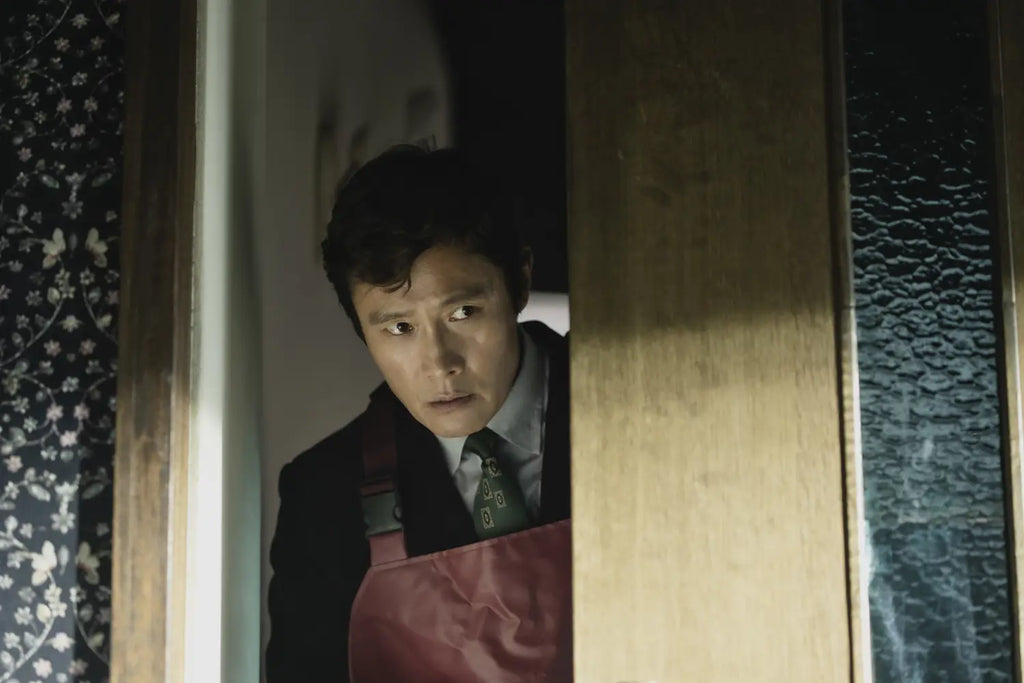
But the brilliance of No Other Choice lies in how its thriller mechanics serve a much larger, much more painfully recognizable idea: how our late-stage capitalist world continues to wreak havoc on our humanity itself. Park isn’t interested in subtlety here, nor should he be. He’s showing us a world where the rules have devolved into dog-eat-dog survivalism, where everyone is clawing at scraps, where momentary monetary gain has become the only thing anyone kills for, dies for, or sacrifices their soul for. Watching Man-su slide from a loving man proud of his hard-earned stability to someone cornered into frantic, violent decisions feels less like narrative escalation and more like the natural conclusion of the system he lives in.
One of the film’s most quietly brilliant images is the late reveal of Man-su’s home, the seemingly last surviving house of its kind in the neighborhood. Just down the road sits an endless stretch of identical apartment complexes, all monotonous, suffocating, inescapable. They loom like a threat, like an omen of what’s coming. Park turns that landscape into a visual metaphor for an entire societal collapse: the slow erasure of individuality, modern comforts, and community in favor of cold, inhuman efficiency. By the film’s end, even if Man-su reaches his goal, we know that the camaraderie of the workplace is gone, his family life has gone through irreversible damage, and worst of all, he’s still as disposable as he ever was. All that sacrifice, all that violence and desperation, for a payoff that barely qualifies as survival.
It’s a gut punch of an ending, one that’s jaw-dropping, heavy, and cruelly honest. When the credits roll, the film lingers like a weirdly bad dream you can’t shake off. Not because of shock value, but because Park has tapped into something deeply true about the current moment. The futility, the hopelessness, and the genuine desperation to cling onto whatever might remain of the old world and its comforts. The feeling that we’re all just one bad day away from falling off the same ledge Man-su does.
No Other Choice is a masterwork among masterworks, the kind of film that will burrow into your brain and sit there for weeks. Park Chan-wook has made plenty of exceptional films across his career, but this one feels different. It’s far angrier, sharper, and more attuned to the economic despair shaping all of our lives from one stretch of the planet to the other. It’s gripping, hilarious, harrowing, immaculately crafted, and emotionally overwhelming. One of the most undeniably impressive and unforgettable films of the year.
‘No Other Choice’ will be coming to select theaters December 25th 2025.


