

The Safdie brothers proved themselves to Hollywood and audiences in relatively short order, channeling frenetic, anxiety-inducing energy into stories of men who take things one step (or ten) too far. Beginning with the success of Good Time, they were ahead of the curve in transforming an established actor like Robert Pattinson into the volatile, unpredictable performer we now know today. They carried that forward with Uncut Gems, weaponizing Adam Sandler’s public persona into something corrosive, unforgettable, and possibly the comedian’s very best performance to date.
The creative duo noticeably split this year to do separate projects. Benny Safdie switched up the energy with his own bruising sports drama The Smashing Machine, coaxing a surprisingly tender and raw performance from Dwayne Johnson. Josh Safdie, rather than go down a quieter path like his brother, has cranked his stressful stylings up to eleven with Marty Supreme, handing the keys this time around to Hollywood’s current golden boy, Timothée Chalamet. The results are predictably thrilling, exhausting, and quietly devastating.
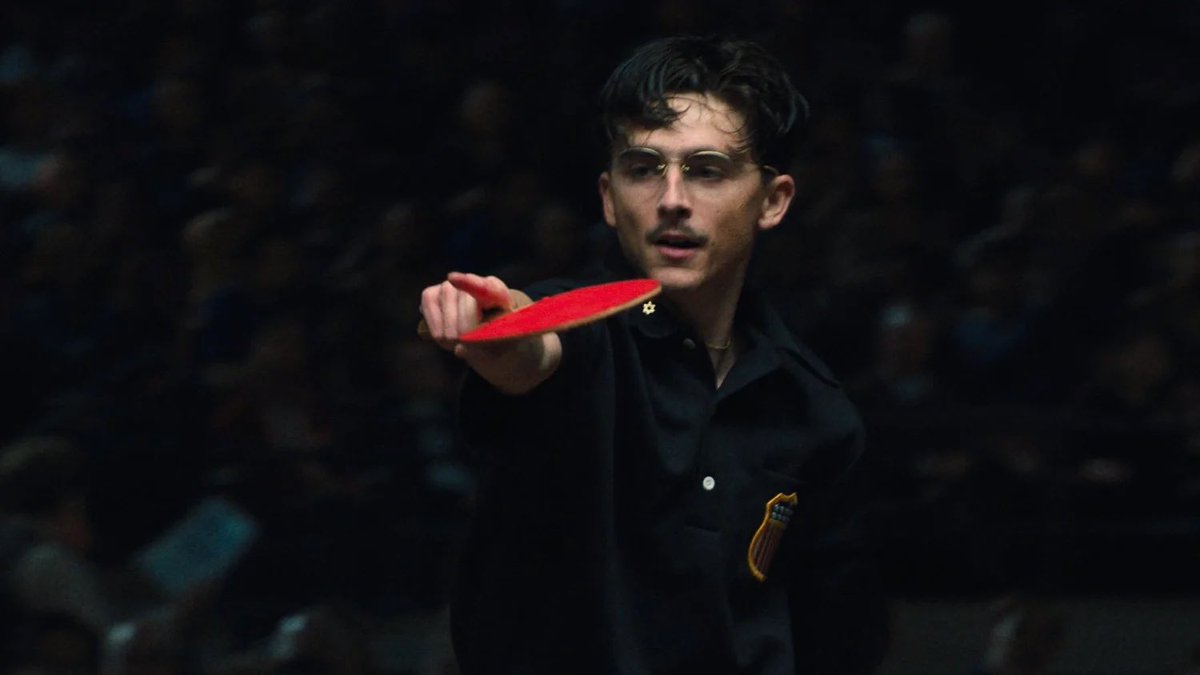
Marty Supreme feels like Uncut Gems recklessness colliding head-on with the unstoppable hedonism of The Wolf of Wall Street, all in service of a bleak thesis about the now-mostly-dead American Dream. Capitalism here isn’t just a grindset routine; it’s a humiliation ritual, one that demands total devotion and leaves nothing but scorched earth in its wake. Wannabe table tennis star Marty Mauser (Chalamet) isn’t just chasing greatness - he’s running from the unbearable alternative of mediocrity, and Safdie (along with writer Ronald Bronstein) stages that flight as a relentless, punishing sprint.
Many have already called this the performance of Chalamet’s career, and it’s hard to argue otherwise. This is a full-body performance, an indulgent celebration of ambition, confidence, bravado, and, above all, real, old-fashioned movie-star charisma. Marty talks too fast, moves too fast, thinks too fast, and never once questions whether the cost of his momentum might be too high. From the moment the hilariously unhinged opening credits kick in (set to “Forever Young,” no less) the film establishes its cruel joke: we’re being shown the highs first, so the lows can hit harder later.

Cinematographer Darius Khondji (Mickey 17, Eddington) shoots scenes on grainy, old-school 35 mm film that immediately places it out of time, giving the movie a tactile, lived-in quality that mirrors Marty’s 1950s world. It looks fantastic. The sound design is immaculate as well, the overlapping dialogue relentless and authentic, and the score from Daniel Lopatin (Good Time, Uncut Gems) absolutely rips. There’s a constant sonic push-and-pull between propulsive electronic scoring and needle drops that seem to yank the film toward the future, even as the narrative insists on dragging us back into the grime of post-war New York.
The sport at the center of the film, table tennis, is portrayed with genuine respect and intensity. Safdie understands how fast and physically demanding it really is, and the match sequences are exhilarating. Watching Marty flail, grunt, leap, and scream with every hit becomes the purest distillation of his existence. Ping pong isn’t just his vocation; it’s the rhythm of his entire life, a back-and-forth struggle where momentum matters more than reflection.
Marty himself is not a good guy. He’s abrasive, selfish, and frequently cruel. He says wildly out-of-pocket things to opponents, to reporters, to supposed friends and family. Still, the film manages that miraculous tightrope walk where it’s impossible not to admire and root for his self-fulfilling prophecies of success. He knows what he wants, he knows how to get it, and he goes out and gets it - even if it means bulldozing everyone who stands in his way.
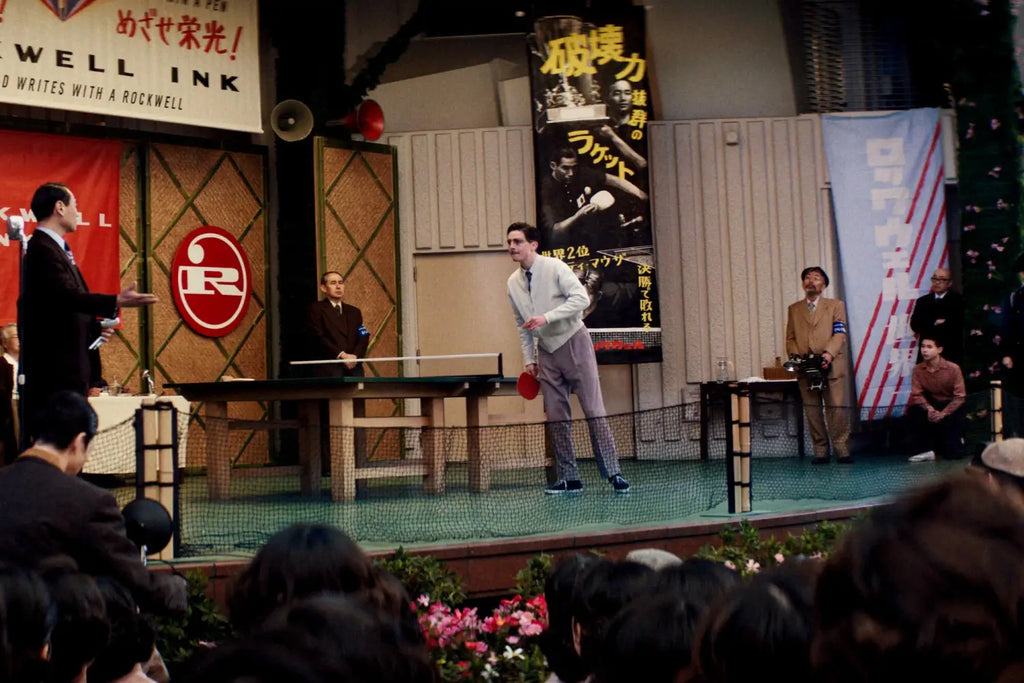
The film’s loose plot structure mirrors that obsession: Marty is constantly trying to scrounge up enough money to get to the next destination (first London, then Japan) before the championships. Every solution creates three new problems. Every hustle spirals into another disaster. Like his previous works, Safdie stages these sequences as a cascading comedy of errors, piling one catastrophe on top of another until the whole thing feels like it might collapse under its own weight.

Along the way, Marty leaves a trail of destruction. His boss / uncle (Larry Sloman) needs him to keep the family business afloat. His married childhood friend Rachel (Odessa A’zion) is in love with him, and Marty uses that affection without ever fully reciprocating it. His best friend Wally (Tyler Okonma AKA Tyler, The Creator) gets dragged into increasingly dangerous schemes. Everyone does so much for Marty, and he gives almost nothing back. He’s trapped, yes, but he’s also choosing, again and again, to prioritize the dream over basic human decency.
The supporting cast is uniformly excellent, especially the surprising pair of Gwyneth Paltrow and Kevin O’Leary, but A’zion (Hellraiser, Until Dawn) stands out as the film’s true emotional anchor. Her performance is devastating, particularly in scenes where she attempts to be part of Marty’s world rather than collateral damage from it. Her reaction to Marty’s insistence that he has “an obligation to see a very specific thing through” is one of the film’s most brutally honest moments, capturing the impossible tension between loving someone and recognizing that they will never choose you over their ambition.
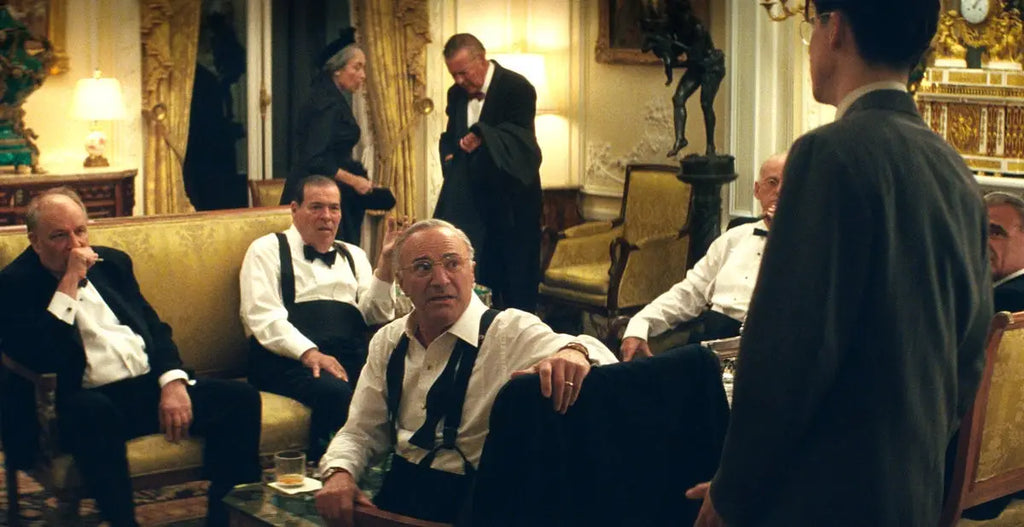
There’s also a fascinating cultural and historical layering at play, especially in the film’s Jewish and Japanese elements. Marty’s rise as a Jewish American athlete in post-WWII America becomes a symbol of assimilation through competition and capitalism, mirrored by his Japanese rival Koto Endo’s (played by real table tennis player Koto Kawaguchi) own geopolitical and personal stakes. Safdie doesn’t always foreground these ideas, but they hum in the production designs and beneath the story’s surface, lending the film an added depth that rewards closer inspection.
Screw over everyone you love and leave bodies in your wake for what? That’s the question Marty Supreme keeps circling. Temporary glory. Minimal recognition. And even then, only after debasing yourself in front of the very systems you thought you were conquering. Marty has no choice but to be an assertive asshole in order to get ahead, but the professional world only tolerates that kind of behavior for so long, unless you’re aiming a bit higher than sports, like say, public office.
In the end, Marty Supreme is exciting, funny, deeply watchable, and often overwhelming by design. It’s another compelling entry in Safdie’s ongoing project of documenting charismatic, self-destructive American hustlers; men who mistake motion for progress and ambition for meaning. Like Marty himself, the film is impressive, exhausting, and impossible to fully shake once it’s over. A prime example of a project firing on all cylinders.
'Marty Supreme' is now playing in theaters.


