

Francis Lawrence has always had a knack for guiding audiences through dystopias that cut a little too close to reality. His Hunger Games films gradually sharpened into visceral dissections of propaganda, power, and survival, and now with The Long Walk, he takes on one of Stephen King’s earliest and most haunting works. Written under the pseudonym Richard Bachman, the novel was steeped in the lingering trauma of the Vietnam War, and it remains one of King’s rawest visions of young men fed to the meat grinder for nothing but the promise of abstract, hollow victory. Lawrence embraces that history and finds a chilling resonance for today.
The setup is devastating in its simplicity. A few dozen boys must walk without stopping. No rest, no reprieve, no forgiveness - pause for too long and the armed guards led by a nameless Major (Mark Hamill) that flank the road will kill you where you stand. The last one alive “wins,” though the prize is little more than supposed financial security. As the miles stretch on, mile markers flash across the screen, a cold reminder of just how far and how little these kids have really gone. It’s genius in its cruelty, and Lawrence stages it with an unblinking eye for the absurdity and the horror of such a ritual. The Long Walk isn’t entertainment; it’s national propaganda, televised across the nation to inspire obedience and fuel economic growth. The whole country profits from the pain of its children.
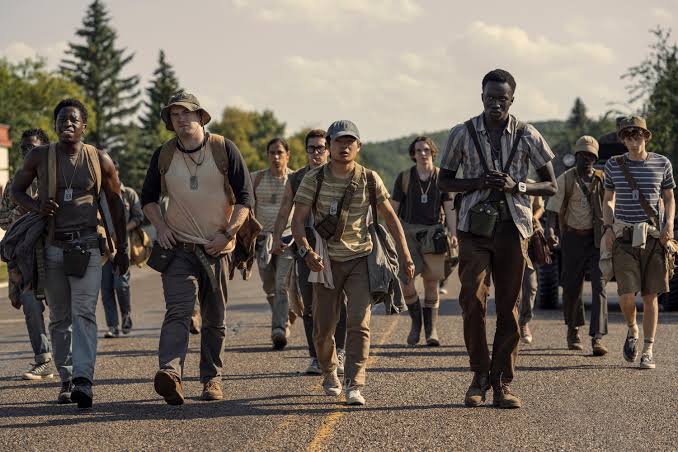
The film immediately strikes its own groove of melancholy and grit. These aren’t warriors or volunteers for glory - they’re young men, hardly adults, some naïve, some hardened, most barely aware of what they’ve signed up for. The ensemble is fleshed out with remarkable care, giving each boy small moments of humanity before inevitably ripping them away. But the main duo is Raymond (Cooper Hoffman), a steady presence who can’t help but try to help others along the way, and Pete (David Jonsson), the group’s spiritual leader who muses about being a songwriter in another life. Their brief exchanges land with the weight of lifetimes: “I keep hoping that part gets easier,” Pete admits after another boy dies on the asphalt. “That’s what I’m afraid of,” Raymond responds. In lines like these, the futility of the march sharpens into unbearable clarity.
Lawrence and frequent cinematographer Jo Willems lean into long takes and claustrophobic camerawork, especially during the first night sequence - an uphill climb that becomes overwhelming in its physical and sensory brutality. The sound design makes every labored breath, every shuffle of feet, feel like an assault. When the first boy collapses and is executed, it’s a moment of pure horror not just for its violence but because the march cannot pause to acknowledge it. The rest must keep walking, forced to process shock and grief in motion or not at all. That cruelty repeats again and again, until numbness itself becomes a kind of death.
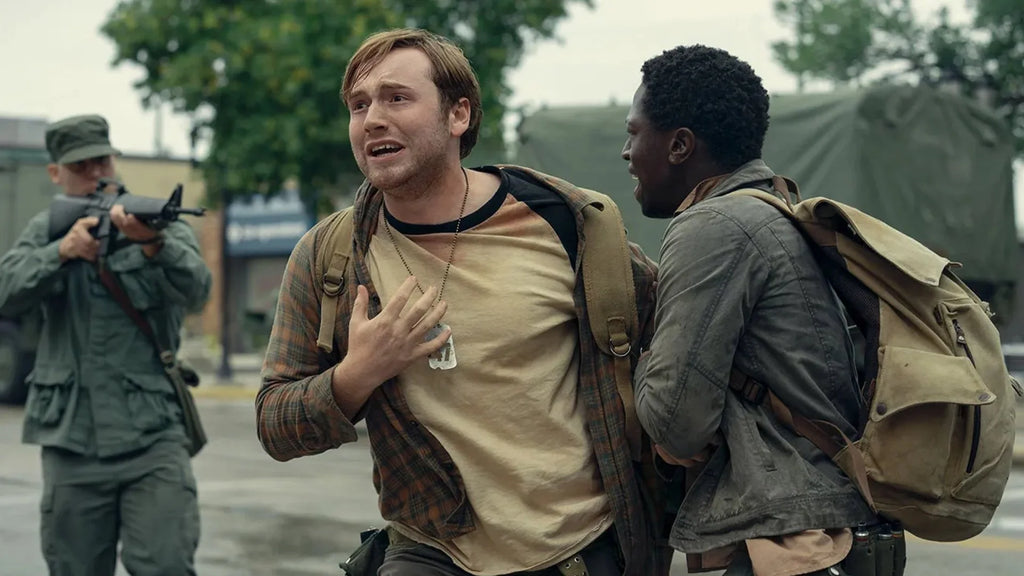
The film doesn’t shy away from showing how quickly friendship and camaraderie curdle into tragedy. For every laugh shared or piece of food offered, there’s the looming certainty that one will watch the other die. Lawrence captures the unbearable paradox of finding connection in a system designed to erase it. That’s where the movie is most successful: the physical toll is obvious, but it’s the mental and emotional weight - the philosophical questions about survival, masculinity, and complicity - that linger. You walk with these boys until you’re limping along with them, just as drained, just as desperate.
It helps that the material is so sturdy. The Long Walk is one of King’s most simplistic yet enduringly bleak works, and the film honors its unsubtle metaphor with a kind of grim reverence. Young men marched into oblivion for nothing but measly state gain - it’s as true now as it was in 1979. Lawrence’s direction doesn’t try to lighten the load, and it shouldn’t. This is a profoundly depressing movie, in the most complimentary way possible. Its atmosphere of futility grows heavier by the mile, each death both expected and crushing. If the script occasionally dips into cheesiness, the performances and mood rescue it, reminding us that hopelessness doesn’t need embellishment.
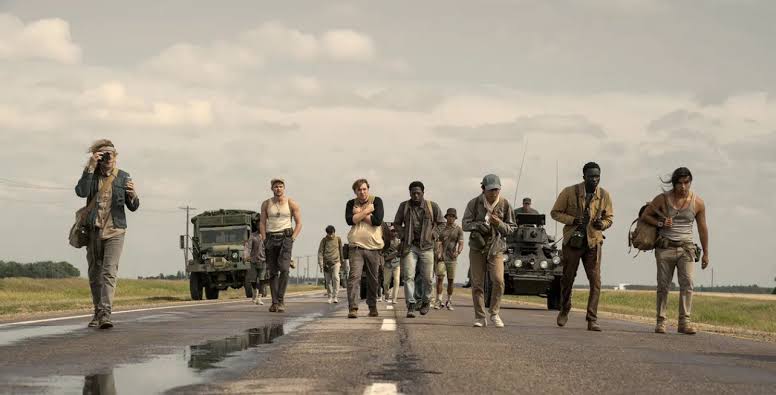
Where the film falters is in its ending. The novel closed on an enigmatic, haunting note that has stuck with readers for decades. Lawrence struggles to translate that final ambiguity to screen, and the climax doesn’t quite land with the same devastating impact. It’s not a dealbreaker (screenwriter JT Mollner makes a couple of positive changes from the original book) but it does keep the adaptation from reaching the kind of legendary finish that the story deserves. Still, by the time the credits roll, the emotional bruising is more than intact.
Hiring a well-honed director like Lawrence may have seemed like the obvious choice for a dystopian exercise like this, but obvious doesn’t have to mean wrong. He’s proven again that he can wring both grim spectacle and emotional intimacy from bleak, genre-heavy material. The Long Walk is unflinching in its violence, unrelenting in its despair, and quietly profound in its depiction of young men eternally forced to march themselves into an early grave. It’s not perfect, but it’s excellent far more often than not - a march that leaves you exhausted, shaken, and unwilling to forget the boys left on the road.
‘The Long Walk’ is now playing in theaters.


